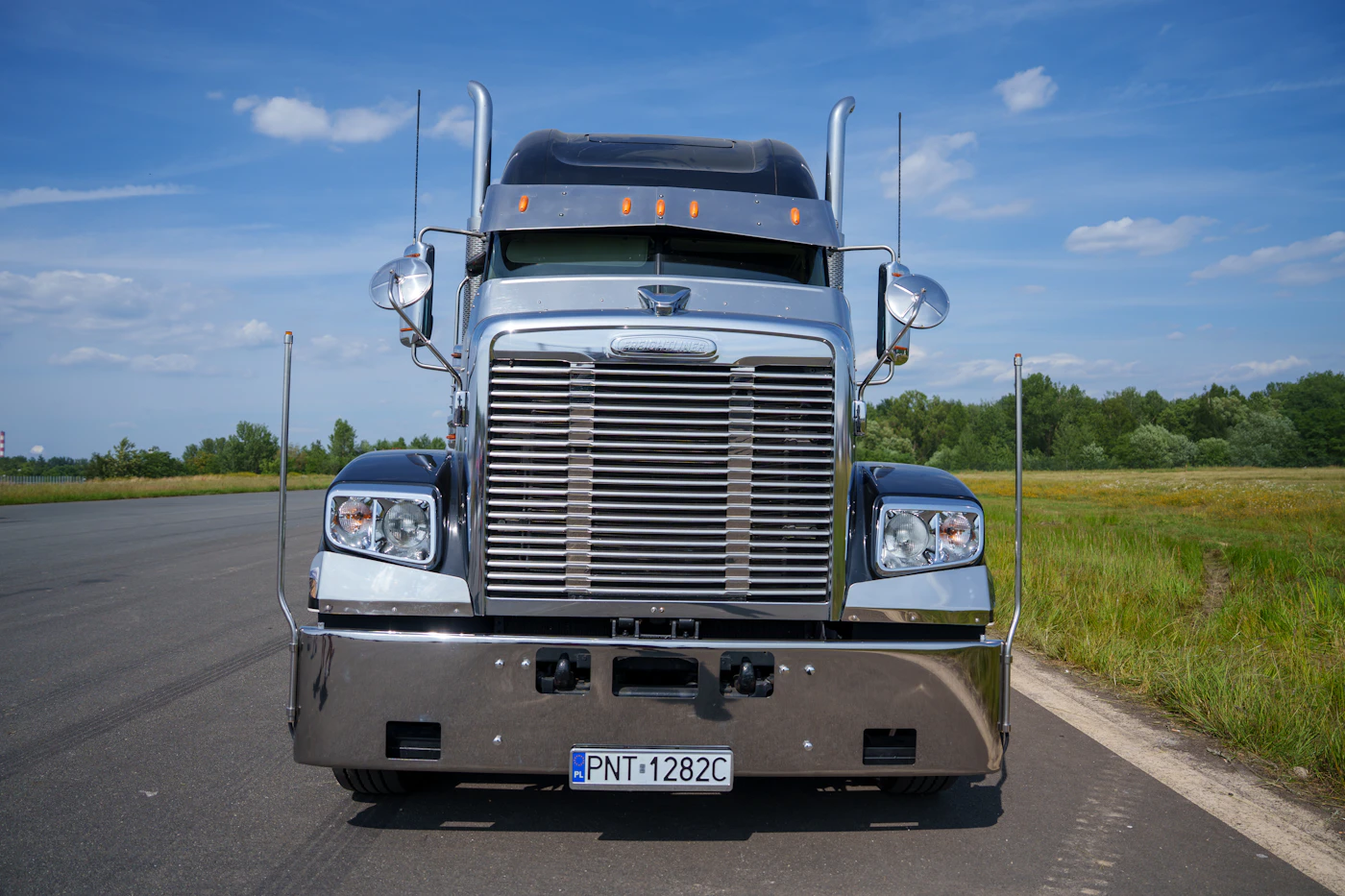
Heavy trucks, heavy exposure.
Commercial auto, pollution, general liability and workers' comp for residential and commercial trash, roll-off, recycling and portable toilet companies.
By Sam Alishahi · CA Insurance License #4348151 · Reviewed November 2026 · How this page is researched
Trucks and what they carry
Waste haulers run heavy trucks on residential streets every day, and the waste itself can cause pollution claims. Many standard auto and liability markets avoid the class.
I place haulers with markets that write waste operations, combining auto liability and physical damage with pollution and general liability.
- Commercial autoLiability and physical damage.
- Pollution liabilitySpills and contamination.
- General liabilityDamage at customer sites.
- Workers' compDrivers and helpers.
What underwriters will ask
Having these ready means I can go to market on the first call. The quote form asks for the same things, and anything you don’t know yet can wait.
- Operations: type of waste and service.
- Trucks: number, types and values.
- Drivers: number and records.
- Hazardous waste: whether you haul it.
- Facilities: yards or transfer stations.
- History: current policies and loss runs.
Hazardous loads: DTSC registration and manifests
In California, Health and Safety Code 25163 makes it unlawful to transport hazardous waste without a DTSC registration, or to transfer custody of it to a transporter who lacks one. The registration isn’t transferable and must be in your possession while transporting. A person authorized to collect solid waste who unknowingly transports hazardous waste to a solid waste facility, incidental to that collection, is exempt.
- ID number first. No transporting before you receive an identification number; apply on EPA Form 8700-12 (22 CCR 66263.17).
- Proof of insurance. The application (Form DTSC 187) goes in with a surety bond, a certificate of insurance or proof of self-insurance, for protection equivalent to Vehicle Code 34630 et seq. A copy of the policy stays at your principal place of business in California. Renewals go in at least 45 days before the registration expires (66263.11).
- Lose the coverage, park the truck. On losing that liability coverage, you notify DTSC in writing immediately and stop hauling hazardous waste. A certified vehicle or container involved in a spill, or in an accident that may leave it noncompliant, is reported in writing within 30 days (66263.15).
- Manifest (federal rule). You may not accept the waste without a manifest, EPA Form 8700-22, or an electronic manifest, and you return a signed copy to the generator before leaving the property. An e-Manifest still needs one printed copy on the vehicle (40 CFR 263.20). Keep your copy three years from the date the initial transporter accepted the waste (263.22). On March 5, 2026, EPA published a proposal to phase out paper manifests.
On a discharge, the transporter takes appropriate immediate action and cleans it up (263.30, 263.31). That duty is why hazardous loads change the submission. See pollution liability and hazmat trucking requirements.
SB 1383: what a city expects of haulers
California’s SB 1383 organic waste regulations (14 CCR Chapter 12) mostly reach haulers through the city or county: the hauler duties are written as things a jurisdiction must require in its contract, agreement or other authorization.
- Approval comes with conditions. A jurisdiction must make meeting the chapter’s requirements a condition of approval of any contract, agreement or other authorization to collect organic waste, and must require haulers to identify the facilities they will take it to (18988.1).
- Destination and records. Haulers take collected organic waste to a facility, operation, activity or property that recovers it, obtain the jurisdiction’s approval and keep a record of that approval (18988.2).
- Self-haul customers. A business hauling its own organics keeps delivery receipts and weight tickets showing cubic yards or tons delivered to each entity. If the facility has no scale that can weigh the vehicle, the record still names each entity that received the waste. Residents who self-haul don’t keep these records (18988.3).
Send me the franchise or permit agreement with the quote request. Whatever insurance terms it sets need to line up with the general liability, auto and umbrella before the first route runs.
Cal/OSHA rules for refuse trucks
Backing and riding-step injuries are where auto, general liability and workers’ comp claims meet. California’s General Industry Safety Orders cover this equipment in Title 8 section 4344.
- Backing. Every refuse collection vehicle needs a back-up warning device or other method as required by section 3706(b). Where backing would endanger employees on foot and the operator’s rear view is obstructed, that points to 1592(b): an automatic back-up alarm, automatic rear braking on contact, a spotter in clear view of the operator, a walk around the vehicle right before backing, keeping all foot traffic out, or equivalent protection.
- Riding steps. Slip-resistant, self-cleaning step surfaces and edges, with grab handles placed for a secure riding stance.
- Travel position. An automatic visual or audible warning in the cab when the container lift, hopper covers, body or tailgate is out of safe travel position, or another effective means that prevents travel.
- Loading. Curb-service manual side-loader sills no higher than 42 inches above the standing surface; unloading door latches that limit sudden opening; hold-open devices on side-hinged tailgates; adequate lighting at the loading area.
List what you run, from cameras to spotter rules, on the application.
Waste hauler insurance, answered
Is pollution covered by auto insurance?
Only partly. Many haulers add pollution liability for spills during collection and transport.
Do roll-off containers need coverage?
Containers can be covered as equipment, and damage at customer sites under liability.
Is hazardous waste a different class?
Yes. It carries additional filings and limits.
Why is waste hauling hard to place?
Heavy trucks on residential routes bring frequent claims, so fewer carriers write it.
Do portable toilet pumpers need a DTSC hazardous waste transporter registration?
Not for septic tank, cesspool, seepage pit or chemical toilet waste that contains no hazardous waste from other sources, if the hauler holds an unrevoked registration from the health officer (Health and Safety Code 25163(b)). If the load contains hazardous waste from other sources, that exemption doesn't apply.
Do you offer waste hauler insurance outside California?
Yes. Clients across the country send the same quote form. Sam Alishahi is licensed in all 50 states and Washington, DC and places policies there directly. The shopping across carriers works the same way. Rules, minimums and markets differ by state — see truck insurance by state or insurance requirements by state.
Official sources
- Cal. Health and Safety Code 25163, hazardous waste transporter registration (california.public.law)
- 22 CCR 66263.11, 66263.15 and 66263.17, transporter registration, insurance proof, reporting, ID number (Cornell LII)
- 40 CFR 263.20, 263.22, 263.30, 263.31, manifest, recordkeeping, discharges (Cornell LII)
- EPA, Hazardous Waste Electronic Manifest System (e-Manifest)
- Cal. Public Resources Code 42951, 42954, 42955, 42961.5, waste tire haulers (california.public.law)
- CalRecycle, Waste and Used Tire Haulers
- 14 CCR 18988.1, 18988.2, 18988.3 and CalRecycle hauler and self-hauler requirements
- CARB, Advanced Clean Fleets and LCFS rulemaking status, news release 25-34 and 2025 Amendments Guidance
- CARB, Solid Waste Collection Vehicle Regulation
- 8 CCR 4344, 3706 and 1592, refuse collection equipment and backing (Cal/OSHA)
Send your fleet. I'll shop it.
Trucks, drivers and service types are enough to start.
Alishahi Insurance · Saman Alishahi, independent insurance broker, California License #4348151. General information, not a quote or a promise of coverage; coverage depends on underwriting and the terms, conditions and exclusions of the policy actually issued. Some policies may be placed with nonadmitted (surplus lines) insurers, which are not members of the California Insurance Guarantee Association (CIGA).
Tell me how to reach you. I’ll take it from there.
Takes about 30 seconds. Your next step comes by email, and you get an update at every step until your quotes are ready.
(877) 711-4545Answered 24/7 · CA License #4348151
Get a reminder before your renewal.
Tell me when your policy renews and I’ll email you about six weeks before, when it’s worth comparing. One email, no calls.