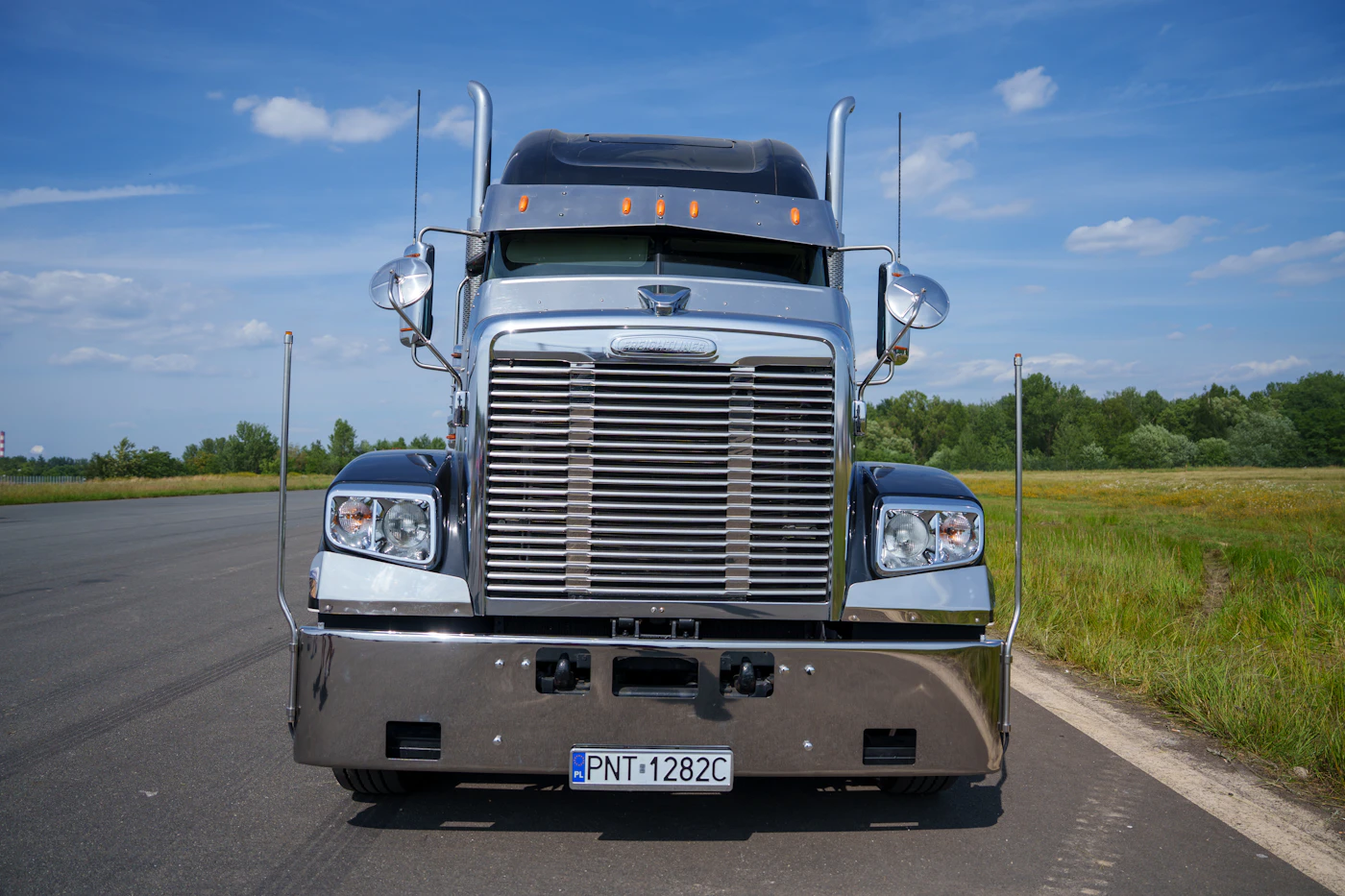
Commercial auto insurance for vehicles that work.
Liability, physical damage, uninsured motorist and hired and non-owned auto coverage for business vans, pickups and fleets, placed across carriers.
Quick answer Commercial auto insurance can include liability, physical damage, uninsured motorist and hired and non-owned auto coverage for business vans, pickups and fleets, and you usually need it when a vehicle is titled to a business or used mainly for business.
- A personal auto policy may deny a claim if the vehicle was being used for business, like hauling tools, making deliveries or carrying crews.
- Hired and non-owned auto coverage protects the business's liability when an employee causes an accident while driving a rented vehicle or their own car for work.
- Physical damage coverage on a commercial auto policy pays for collision and comprehensive on the business's own vehicles.
- Commercial auto covers business vehicles like vans and pickups, while semi-trucks and for-hire hauling need trucking insurance with additional filings and coverages.
- Some carriers will add a driver with a DUI at a higher price, while others require the driver to be excluded, depending on how recent it is.
By Sam Alishahi · CA Insurance License #4348151 · Reviewed November 2026 · En español · How this page is researched
Personal auto policies stop at business use
A personal auto policy may deny a claim if the vehicle was being used for business, like hauling tools, making deliveries or carrying crews. Vehicles titled to a business need a commercial policy.
I quote your vehicles and drivers across carriers, and add hired and non-owned auto coverage if employees ever drive their own cars or rentals for work. For semi-trucks and for-hire hauling, see commercial trucking.
- LiabilityInjuries and property damage your business vehicles cause.
- Physical damageCollision and comprehensive for your own vehicles.
- Hired and non-ownedLiability when employees drive rentals or their own cars for work.
- Uninsured motoristYour drivers' injuries when the at-fault driver has no or too little insurance.
What underwriters will ask
Having these ready means I can go to market on the first call. The quote form asks for the same things, and anything you don’t know yet can wait.
- Vehicles: year, make, model, VIN and how they're titled.
- Drivers: names, license numbers and dates of birth.
- Use: what the vehicles do and how far they travel.
- Garaging: where vehicles are kept overnight.
- Business: what your company does.
- Current policy: declarations and loss runs.
Covered auto symbols: which vehicles the policy covers
On ISO's Business Auto Coverage Form, CA 00 01, the declarations list each coverage you bought with one or more numbers beside it. Those are covered auto designation symbols, and the form says the symbols entered next to a coverage designate the only autos covered for it. IRMI lists 1 through 9 and 19 as the business auto symbols, with custom symbol 10 available through the CA 99 54 endorsement. Here is how the 10 13 edition of the form describes them:
- 1, any auto.
- 2, owned autos only: includes autos you acquire after the policy begins and, for liability, trailers you don't own while attached to power units you own.
- 3 and 4: owned private passenger autos only, or owned autos other than private passenger only.
- 5 and 6: owned autos required to have no-fault benefits, or required to carry uninsured motorists coverage they can't reject, in the state where they're licensed or principally garaged.
- 7, specifically described autos: only the vehicles listed on the declarations with a premium charge shown.
- 8, hired autos only: autos you lease, hire, rent or borrow, but not ones borrowed from employees, partners, LLC members or their households.
- 9, non-owned autos only: autos used in connection with your business that you don't own, lease, hire, rent or borrow, including employees' cars while used in your business or personal affairs.
- 19: land vehicles that would be mobile equipment if a motor vehicle insurance law didn't apply to them.
The choice shows up the day you buy a truck. Under symbols 1 through 6 or 19, an auto you acquire of the described type is covered for the rest of the policy period. Under symbol 7, it's covered only if the policy already covers every auto you own for that coverage, or the new one replaces a covered auto, and you tell the insurer within 30 days. When I compare quotes, I read the symbols coverage by coverage, because two policies with the same limits can cover different vehicles. Your policy's edition and endorsements control.
California rules that reach business vehicles
Other states run their own permit and registration programs; see truck insurance by state. In California:
Motor Carrier Permit
DMV says new carriers must apply for a Motor Carrier Permit before they begin operations. Under DMV's rules, it's needed by:
- Anyone paid to haul property in a motor vehicle, regardless of the vehicle's size, type or weight.
- Generally, anyone operating a commercial vehicle of 10,001 pounds GVWR or more, for commercial or private use.
- Any vehicle or combination hauling hazardous materials, truck-and-trailer combinations over 40 feet coupled, and any vehicle or combination that requires a commercial driver license.
A pickup is exempt only if it is under 11,500 pounds GVWR, under 8,001 pounds unladen, has a box-type bed no longer than nine feet and is operated in a non-commercial manner. You'll need a CA number from the CHP first, and an EPN requester code if you employ drivers whose commercial licenses carry a hazardous materials or other applicable endorsement. The permit runs in 12-month terms. Proof of insurance goes on DMV form MC 65 M, or MC 131 M for qualifying self-insurers; limits are on my commercial trucking page. I ask whether you hold a permit and your CA number along with each VIN.
Commercial auto insurance, answered
Do I need commercial auto insurance for my work truck?
If the vehicle is titled to a business or used mainly for business, you usually do. Personal auto policies can exclude business use.
What is hired and non-owned auto coverage?
It covers your business's liability when an employee causes an accident while driving a rented vehicle or their own car for work.
Is commercial auto the same as trucking insurance?
Commercial auto covers business vehicles like vans and pickups. Trucking insurance is for semi-trucks and for-hire hauling, which need additional filings and coverages.
Can I add a driver with a DUI?
Some carriers will, at a higher price, and others require the driver to be excluded. It depends on how recent it is.
Do you offer commercial auto insurance outside California?
Yes. Clients across the country send the same quote form. Sam Alishahi is licensed in all 50 states and Washington, DC and places policies there directly. The shopping across carriers works the same way. Rules, minimums and markets differ by state — see truck insurance by state or insurance requirements by state.
Official sources
- ISO Business Auto Coverage Form CA 00 01 10 13 (specimen copy)
- IRMI: auto coverage symbols
- California Insurance Code 11580.9
- California Labor Code 2802
- DLSE opinion letter, Reimbursement for Expenses (Feb. 22, 1993)
- DLSE opinion letter, Labor Code 2802 and excess auto insurance (Nov. 5, 1998)
- California DMV: Motor Carrier Permits
- California Vehicle Code 1808.1
- California DMV: Employer Pull Notice Program FAQs
- California Vehicle Code 1808.1 (FindLaw)
Send your vehicles and drivers. I'll shop it.
A vehicle list, a driver list and your current declarations page are enough to start.
Alishahi Insurance · Saman Alishahi, independent insurance broker, California License #4348151. General information, not a quote or a promise of coverage; coverage depends on underwriting and the terms, conditions and exclusions of the policy actually issued.
Short videos from Sam
Under a minute each. Videos use an AI-generated version of Sam’s likeness and voice. General information only; coverage depends on your policy.
Tell me how to reach you. I’ll take it from there.
Takes about 30 seconds. Your next step comes by email, and you get an update at every step until your quotes are ready.
(877) 711-4545Answered 24/7 · CA License #4348151
Get a reminder before your renewal.
Tell me when your policy renews and I’ll email you about six weeks before, when it’s worth comparing. One email, no calls.