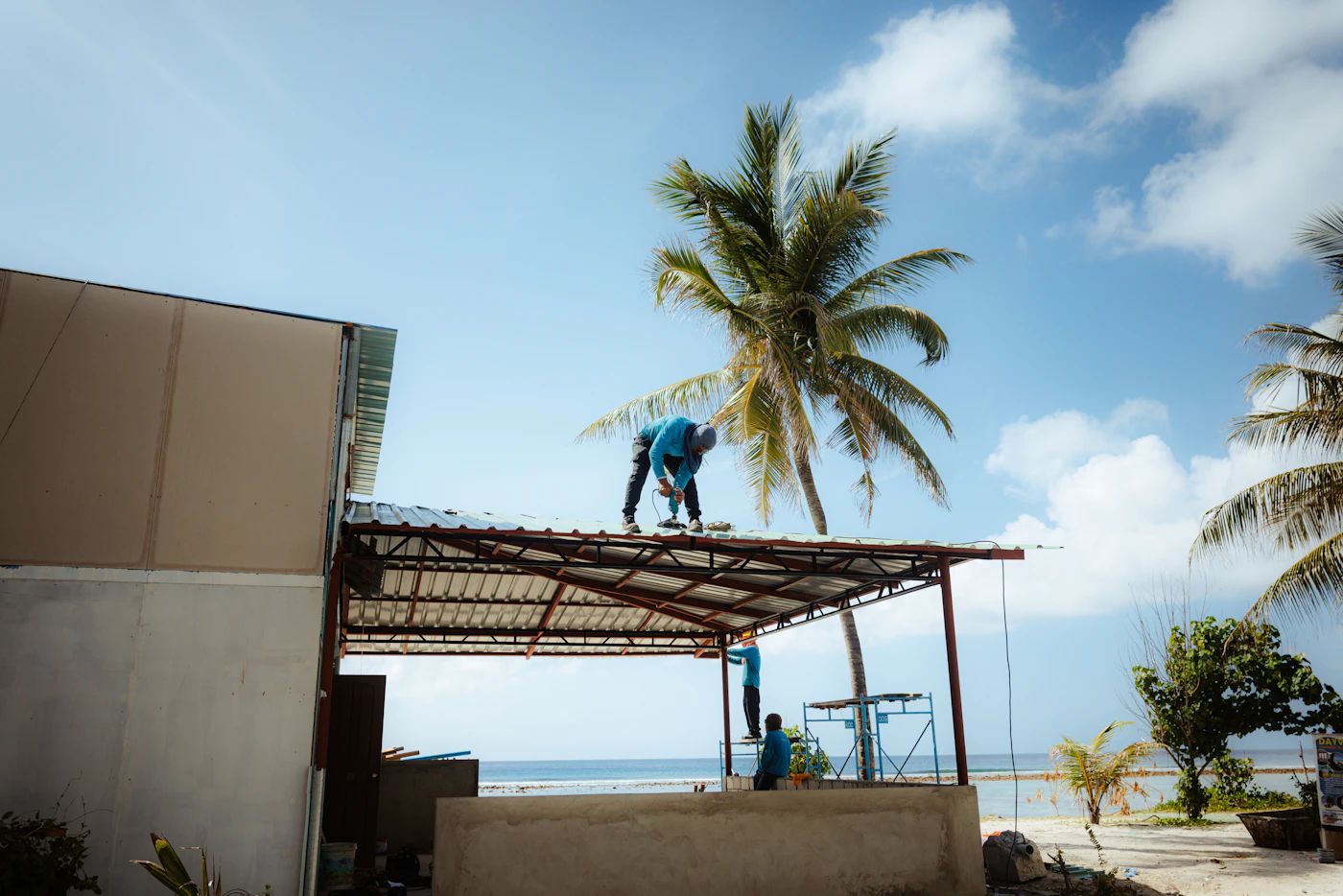
General liability with the right certificates.
Coverage for injuries, property damage and advertising injury your business causes others, with certificates and endorsements your clients and landlords require.
Quick answer Contractor general liability insurance in California covers injuries, property damage and advertising injury your business causes others, and state law requires it only of contractors licensed as an LLC.
- A California contractor LLC must carry general liability with at least a $1,000,000 aggregate limit if five or fewer people are on its personnel of record, plus $100,000 per additional person, up to $5,000,000.
- California does not require sole-owner or corporation contractors to carry general liability, though most contracts and general contractors ask for it.
- General liability protects a business if someone claims its operations injured them or damaged their property.
- General liability does not cover employee injuries, your own property, professional errors or vehicles.
- Many contracts ask for general liability limits of $1 million per occurrence and $2 million aggregate, so check your lease or contracts for exact requirements.
By Sam Alishahi · CA Insurance License #4348151 · Reviewed November 2026 · En español · How this page is researched
Most contracts ask for it first
Landlords, clients, general contractors and event venues commonly require general liability before you can start work.
The policy protects your business if someone claims your operations injured them or damaged their property.
California law requires it of one group of contractors: those licensed as an LLC. A contractor LLC must carry general liability with an aggregate limit of at least $1,000,000 if five or fewer people are on its personnel of record, plus $100,000 for each additional person, up to $5,000,000 (Business and Professions Code §7071.19). Sole owners and corporations aren’t required to carry it by the state, though most contracts and general contractors ask for it.
- Bodily injuryInjuries to customers, visitors and the public.
- Property damageDamage to other people’s property caused by your work or operations.
- Personal and advertising injuryClaims like libel, slander or copyright infringement in advertising.
- Not includedEmployee injuries, your own property, professional errors and vehicles.
What underwriters will ask
Having these ready means I can go to market on the first call. The quote form asks for the same things, and anything you don’t know yet can wait.
- Business: operations and industry.
- Revenue: annual gross sales.
- Payroll: for some classifications.
- Contracts: insurance requirements you’ve been given.
- Locations: where you work.
- Claims: any in the last five years.
Coverage A, B and C: the three parts of a standard CGL form
The standard commercial general liability (CGL) form comes from the Insurance Services Office (ISO), which introduced it in 1986. The occurrence version is CG 00 01; its April 2013 edition is CG 00 01 04 13. Carriers also use their own forms; I check the form number.
- Coverage A, bodily injury and property damage. An agreement to pay damages an insured is legally liable for because of bodily injury or property damage, plus a separate promise to defend suits seeking damages potentially covered by it, all subject to the exclusions. The products-completed operations hazard, meaning your products and work you have completed or abandoned, falls under this part.
- Coverage B, personal and advertising injury. IRMI lists the personal injury offenses as unlawful arrest, detention or jailing, malicious prosecution, unjustified eviction, slander, libel and invasion of privacy. The advertising offenses, tied to advertising your goods or services, are libel, slander, invasion of privacy, copyright infringement and misappropriation of advertising ideas. The standard form has combined the two into one defined term since 1998.
- Coverage C, medical payments. A separate insuring agreement designed to reimburse others' medical or funeral expenses from bodily injury sustained by accident, without regard to whether you are liable, under the conditions the policy sets.
Occurrence vs. claims-made general liability
On an occurrence policy, the event giving rise to the claim has to happen within the policy period; the claim does not have to be reported during that period. A claims-made policy responds to a claim first made against you during the policy period. IRMI notes claims-made triggers are only occasionally found in CGL policies. ISO's claims-made version is CG 00 02, and the ACORD 25 shows which you have with a CLAIMS-MADE or OCCUR box.
In the standard ISO claims-made form, per IRMI:
- Retroactive date. It eliminates coverage for bodily injury or property damage that occurred before that date. An insurer advancing it triggers the basic extended reporting period below, so compare retro dates when you renew or change carriers.
- Basic extended reporting period. Automatic, without additional charge, when the policy is cancelled or not renewed, the retro date is advanced, or it is replaced with an occurrence policy. An incident reported no later than 60 days after the policy ends gets five years for a claim to be made. For an incident never reported, the claim must be made within 60 days after the policy ends.
- Supplemental extended reporting period. Optional, requires additional premium, and must be elected in writing within 60 days after the policy ends. It begins only after the basic period ends and reinstates the aggregate limits.
Certificates vs. endorsements: what the paper does and doesn't do
An ACORD 25 certificate is evidence that a policy exists. The 2016/03 edition says it is issued as a matter of information only, confers no rights on the holder, does not amend, extend or alter the coverage, and is not a contract between the insurer or producer and the holder. It also warns that limits shown may have been reduced by paid claims. State rules vary:
- California: Insurance Code section 384 requires a certificate used as evidence of insurance in place of a policy copy to state that it is not an insurance policy and does not amend, extend or alter the coverage. It does not apply to a surplus line broker certificate as defined in section 48.
- Texas: Insurance Code section 1811.051 bars a property or casualty insurer or agent from issuing a certificate that alters, amends or extends the policy's coverage or terms, and says a certificate may not convey a contractual right to the holder.
Additional insured status comes from the policy, not the certificate. The form itself says that if the holder is an additional insured, the policy must have additional insured provisions or be endorsed, and if subrogation is waived, certain policies may require an endorsement (see waiver of subrogation). ISO's CG 20 10 additional insured endorsement is built around ongoing work, and CG 20 37 is the separate completed-operations form. When a contract requires both, I send the endorsement copies with the certificate. See certificate holder vs. additional insured and our certificate checker.
General liability, answered
What limits do I need?
Many contracts ask for $1 million per occurrence and $2 million aggregate. Check your lease or contracts for exact requirements.
What is an additional insured?
A person or company, like a landlord or general contractor, added to your policy for claims arising from your work.
Does general liability cover mistakes in my professional advice?
No. That’s professional liability, also called errors and omissions.
How fast can I get a certificate?
Once a policy is bound, certificates can usually be issued quickly. Tell me your deadline.
Do defense costs reduce my general liability limits?
Under the standard ISO occurrence form, IRMI's worked example treats defense expense as unlimited until settlement or judgment, so defense is not taken out of the limits. Once an aggregate limit is exhausted, the insurer's duty to defend later suits within it ends.
Do you offer general liability insurance outside California?
Yes. Clients across the country send the same quote form. Sam Alishahi is licensed in all 50 states and Washington, DC and places policies there directly. The shopping across carriers works the same way. Rules, minimums and markets differ by state — see insurance requirements by state.
Official sources
- IRMI: Commercial general liability (CGL) policy
- IRMI (C. Stanovich, 2019): How the limits apply in the CGL policy
- IRMI (C. Stanovich, 2010): A high-level view of the CGL policy
- IRMI (C. Stanovich, 2012): The claims-made CGL policy
- FC&S (2014): Claims-made CGL form (CG 00 02 04 13)
- IRMI (C. Stanovich, 2006): Additional insured endorsements, a potential minefield (part 3)
- IRMI glossary: personal and advertising injury (with personal injury, advertising injury, medical payments, expected or intended, insured contract, professional services exclusion, occurrence basis, claims-made trigger, products-completed operations)
- California Insurance Code section 384 (california.public.law)
- Texas Insurance Code section 1811.051 (texas.public.law)
- ACORD 25 (2016/03) certificate of liability insurance, as published by The Ohio State University
Send the contract requirements. I’ll match them.
If a certificate is holding up work, tell me the deadline.
Alishahi Insurance · Saman Alishahi, independent insurance broker, California License #4348151. General information, not a quote or a promise of coverage; coverage depends on underwriting and the terms, conditions and exclusions of the policy actually issued.
Tell me how to reach you. I’ll take it from there.
Takes about 30 seconds. Your next step comes by email, and you get an update at every step until your quotes are ready.
(877) 711-4545Answered 24/7 · CA License #4348151
See instant prices
California businesses: answer a few questions and see prices from insurance companies in minutes.
Get a reminder before your renewal.
Tell me when your policy renews and I’ll email you about six weeks before, when it’s worth comparing. One email, no calls.