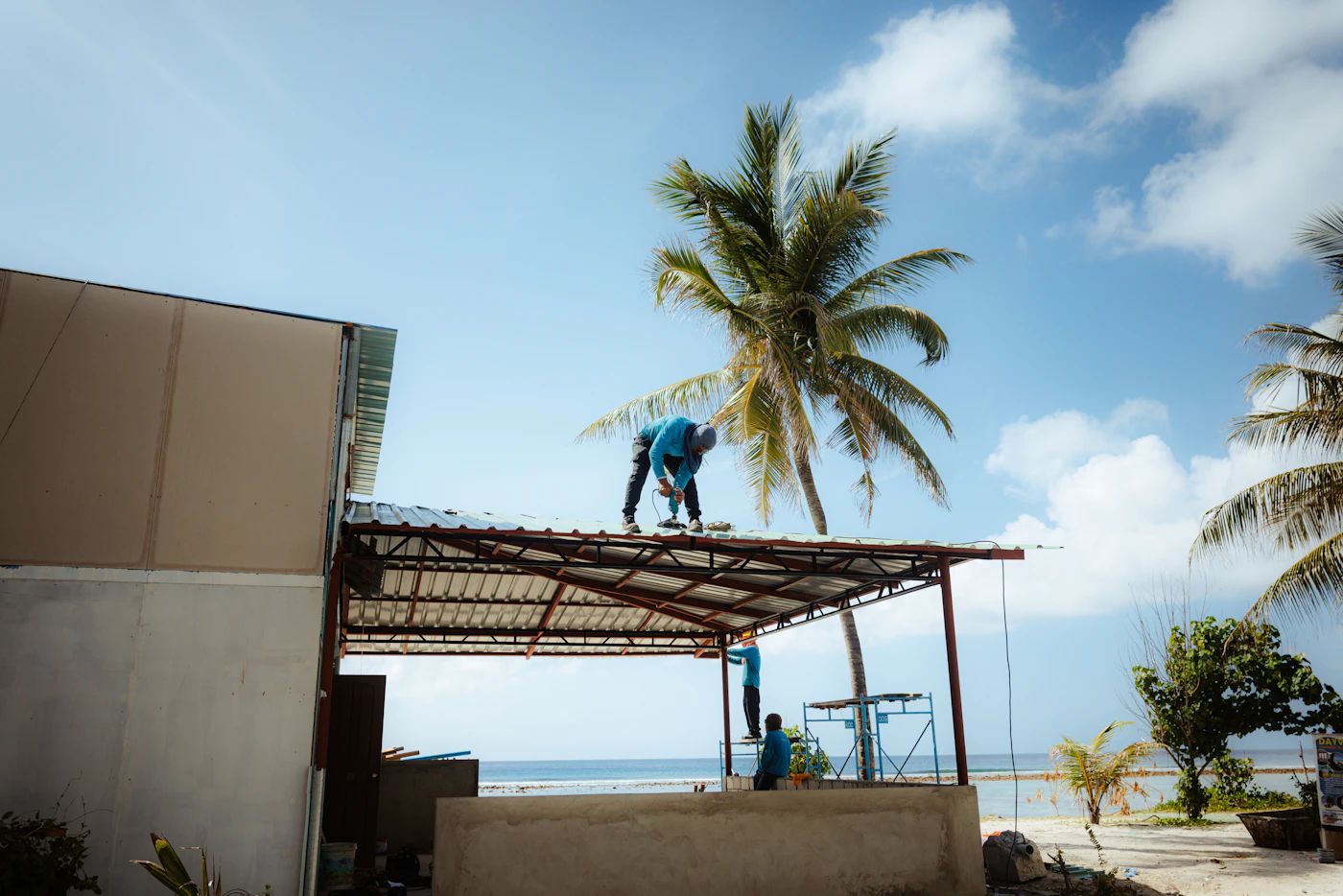
Carpentry insurance for the shop and the job.
General liability, workers' compensation, shop and tools coverage, commercial auto and CSLB bonds for cabinet installers, millwork shops and finish carpenters.
By Sam Alishahi · CA Insurance License #4348151 · Reviewed November 2026 · How this page is researched
Shop work and field work are insured differently
Building cabinets in a shop and installing them in a customer's kitchen are different risks. Shop work brings table saws, dust and a building full of equipment and inventory. Field work brings finished homes, heavy cabinets on walls and damage to everything around the install.
Carriers rate the two separately for both workers' comp and liability, so splitting your payroll and revenue accurately matters. I place C-6 contractors with carriers that write the trade and cover the shop, the tools and the work you install.
- General liabilityDamage to customers' homes, injuries to others, and cabinets and millwork you've built and installed.
- Workers' compShop and installation crews. Required with employees, and for all licensed contractors from 2028.
- Shop and toolsThe building, woodworking machinery, inventory and tools on the job.
- License bondThe $25,000 contractor license bond CSLB requires.
What underwriters will ask
Having these ready means I can go to market on the first call. The quote form asks for the same things, and anything you don’t know yet can wait.
- License: CSLB number and classifications.
- Work: cabinets, millwork, trim, doors or countertops, with rough percentages.
- Shop vs. field: how payroll and revenue split between the shop and installs.
- Shop: address, building details and value of machinery and inventory.
- Payroll and revenue: employees, subcontractor costs and gross receipts.
- History: current policies and loss runs.
C-5 or C-6: match the license to the work you describe
In California the Contractors State License Board splits carpentry into two specialty classes. The classes on your license and the operations on your insurance application should tell the same story.
- C-5 Framing and Rough Carpentry: in CSLB's wording, form work, framing or rough carpentry necessary to construct framed structures, installing or repairing individual components of framing systems, and associated rough work including sub-flooring, siding, exterior staircases and railings, overhead doors, roof decking, truss members and sheathing.
- C-6 Cabinet, Millwork and Finish Carpentry: makes cabinets, cases, sashes, doors, trims, nonbearing partitions and other finish carpentry by cutting, surfacing, joining, gluing and fabricating wood or other products, and also places, erects and finishes those cabinets and millwork in structures.
Both classes replaced the old C-5 Carpentry, Cabinet and Millwork class under amendments operative January 1, 2003, and some licensees who passed that older exam had C-6 added to their license. If your license dates from before then, look it up on CSLB and confirm which classes it shows today.
What to do: if you hold C-6 and start taking siding, exterior stairs or sheathing, that is work CSLB's C-5 wording describes. If you frame and also hang cabinets and trim, say so. Describe every operation with rough percentages so the liability classification and the workers' comp codes below match what your crews do. If framing is most of your work, see framing contractor insurance.
Cal/OSHA fall protection on residential framing
Fall rules vary by state. California has one written for framing crews: Title 8, Section 1716.2, which covers framing new buildings with residential-type and light commercial methods, meaning joists or trusses resting on stud walls, in wood or light gage steel.
- 6 feet or more: working on top plates, joists, rafters, trusses or beams; laying out and building stud walls on a floor that will later be enclosed; and installing starter board, roof sheathing or fascia all require scaffolding, guardrails, safety nets or personal fall protection systems. A fall protection plan with safety monitors and controlled access zones (Sections 1671.1 and 1671.2) is allowed only where the employer shows conventional methods are infeasible.
- Interior framing between 6 and 15 feet: the plan may replace conventional methods only if members are securely braced or laid on their sides on the top plate, spacing is no more than 24 inches on center or covered with plywood sheathing, and workers stay more than 6 feet from an unprotected side or edge.
- Walls 15 feet or taller: before raising them by hand, install temporary restraints such as cleats on the floor system or straps on the bottom plate. Anchor bolts alone can't be used for blocking or bracing.
- Training: exposed employees must be trained under Sections 1509 and 3203, and the training documented under Section 3203.
Section 1716.1 is a separate rule for essentially horizontal wood framing on non-residential buildings such as warehouses, gyms and malls, with a 15-foot trigger. It says it doesn't apply to framing typical of residential structures. Keep the training records and any fall protection plan with each job file.
Carpentry contractor insurance, answered
Why does it matter how much of my work is in the shop?
Workers' comp and liability are rated by class, and shop woodworking and on-site installation are rated differently. Splitting payroll and revenue accurately keeps the premium right and avoids surprises at audit.
Does general liability cover a cabinet that falls off the wall?
Damage to the customer's other property and injuries caused by your completed work are generally covered, subject to the policy terms. Replacing the cabinet itself is typically not covered.
Are my shop and machinery covered by general liability?
No. General liability covers injuries and damage to others. Your building, woodworking machinery and inventory need commercial property and equipment coverage.
Do finish carpenters need workers' comp with no employees?
Not today, unless you have employees. Under SB 216, as postponed by SB 1455, every licensed contractor must carry workers' comp starting January 1, 2028.
Which CSLB license covers cabinets and finish carpentry?
C-6 Cabinet, Millwork and Finish Carpentry. A license is generally required for jobs of $1,000 or more in labor and materials combined.
What is the difference between WCIRB 5403 and 5432?
They describe the same carpentry work and differ only by wage. Effective September 1, 2026, 5432 applies to employees whose regular hourly wage equals or exceeds $46.00, verified at final audit; payroll not shown to meet that wage goes to 5403.
At what height do framers need fall protection in California?
Under Title 8 Section 1716.2, residential-type framing work on top plates, joists and roof framing, building stud walls on floors, and installing roof sheathing or fascia requires fall protection at 6 feet or more. A fall protection plan may substitute only where conventional methods are shown infeasible, or for interior framing between 6 and 15 feet when the listed conditions are met.
Do you offer carpentry contractor insurance outside California?
Yes. Clients across the country send the same quote form. Sam Alishahi is licensed in all 50 states and Washington, DC and places policies there directly. The shopping across carriers works the same way. Rules, minimums and markets differ by state — see insurance requirements by state.
Official sources
- CSLB: C-5 Framing and Rough Carpentry Contractor
- CSLB: C-6 Cabinet, Millwork and Finish Carpentry Contractor
- WCIRB: 5432 Carpentry
- WCIRB: 5403 Carpentry
- WCIRB: September 1, 2026 Regulatory Filing Quick Reference Guide
- WCIRB: 5146(1) Cabinet, Fixture or Trim Installation
- Cal/OSHA Title 8 §1716.2 Residential-type Framing Activities
- Cal/OSHA Title 8 §1716.1 Structural Wood Framing Systems
- IRMI: Breach of Contractor's Warranty Defeats Coverage
- IRMI: Misapplication of the Employers Liability Exclusion in CGL Policies (Part 2)
Send your license number. I'll shop it.
Your CSLB number, payroll and revenue are enough to start.
Alishahi Insurance · Saman Alishahi, independent insurance broker, California License #4348151. General information, not a quote or a promise of coverage; coverage depends on underwriting and the terms, conditions and exclusions of the policy actually issued. Some policies may be placed with nonadmitted (surplus lines) insurers, which are not members of the California Insurance Guarantee Association (CIGA).
Tell me how to reach you. I’ll take it from there.
Takes about 30 seconds. Your next step comes by email, and you get an update at every step until your quotes are ready.
(877) 711-4545Answered 24/7 · CA License #4348151
Get a reminder before your renewal.
Tell me when your policy renews and I’ll email you about six weeks before, when it’s worth comparing. One email, no calls.