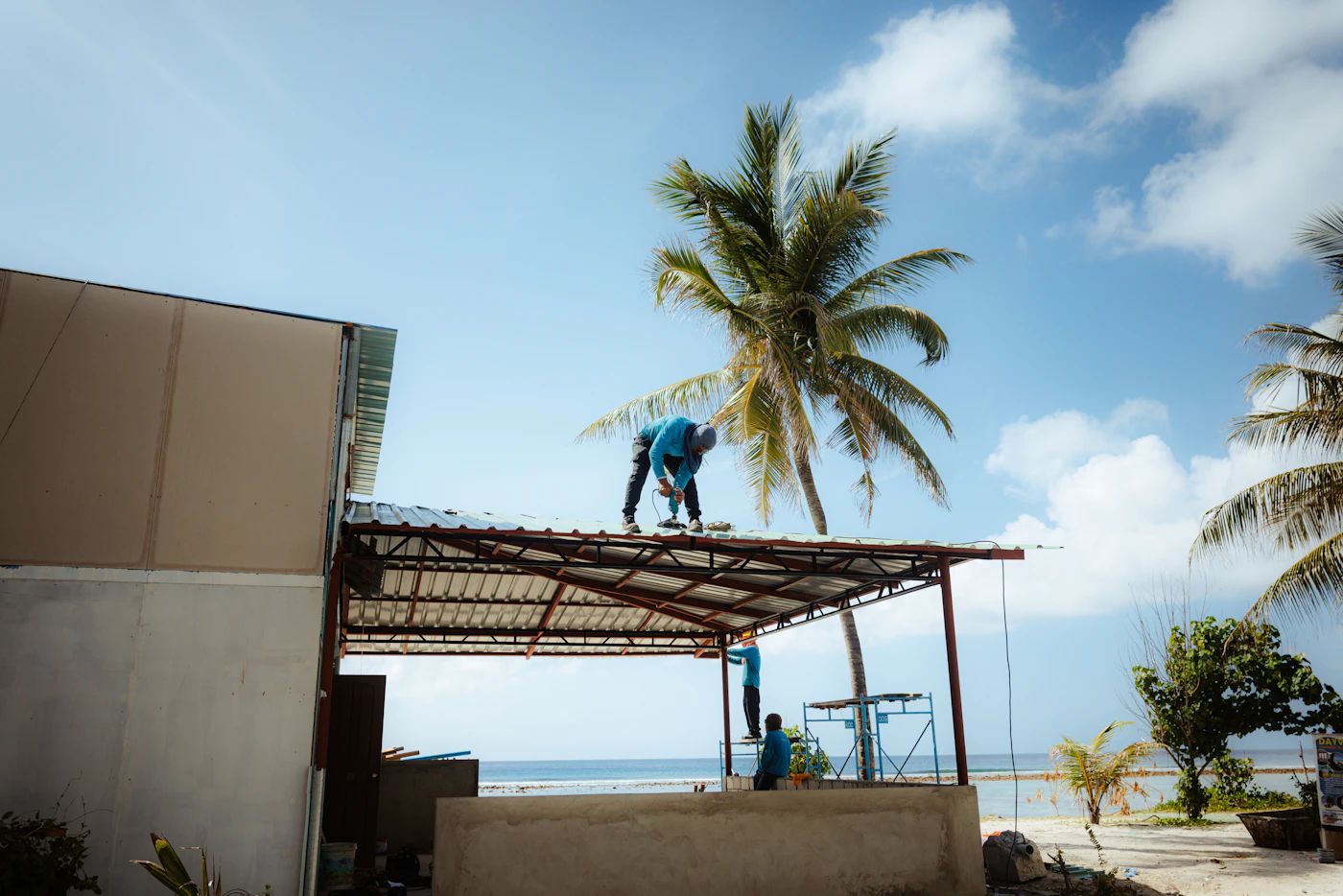
Plumber insurance built around water damage.
General liability, workers' compensation, tools, commercial auto and license bonds for California plumbing contractors, from service calls to new construction.
By Sam Alishahi · CA Insurance License #4348151 · Reviewed November 2026 · En español · How this page is researched
One leak can become a large claim
A failed fitting behind a wall can soak floors, cabinets and the unit below before anyone notices. Water damage is the claim plumbers see most, and carriers price and restrict coverage around it.
I match your plumbing business to carriers that fit the work you do, whether residential service, repiping, new construction or commercial, and set up workers' comp for your crew now and for the January 1, 2028 requirement.
- General liabilityWater damage and injuries caused by your work, including completed jobs.
- Workers' compRequired for employees now, and for all licensed contractors from January 1, 2028.
- Tools and equipmentTools, cameras, jetters and parts on the truck.
- Commercial autoService trucks and vans.
What underwriters will ask
Having these ready means I can go to market on the first call. The quote form asks for the same things, and anything you don’t know yet can wait.
- License: CSLB number and classifications.
- Work: service and repair, repipes, new construction or commercial.
- Payroll: employees, payroll and subcontractor costs.
- Revenue: annual gross receipts.
- Vehicles and equipment: trucks and equipment value.
- History: current policies and loss runs.
What CSLB asks of a C-36 plumber
CSLB requires two things on file with your license: a contractor bond, and either a workers' comp certificate or an exemption. Both belong in the insurance conversation, because a gap in either one reaches the license.
- Contractor bond: $25,000 since January 1, 2023, under Senate Bill 607. If the license is qualified by a responsible managing employee, a $25,000 bond of qualifying individual is also required. See contractor license bonds.
- Workers' comp on file: CSLB accepts a certificate of workers' comp insurance, a Department of Industrial Relations certification of self-insurance, or a signed exemption. C-36 is not one of the classes barred from the exemption (C-8, C-20, C-22, C-39 and C-61/D-49), but no exemption is allowed if the license is qualified by a responsible managing employee.
- Hiring ends the exemption: once you hire, the exemption on file is no longer valid, and CSLB must receive proof of coverage within 90 days of the hire. Failing to maintain coverage results in suspension, and work done while suspended is considered unlicensed. See workers' comp with no employees.
- January 1, 2028: SB 1455 (Chapter 485, Statutes of 2024) set that date for the requirement that all licensees hold workers' comp, and directed CSLB to set up a process for verifying who is eligible for an exemption. Check where your license lands with the 2028 check.
Other states set their own bond, workers' comp and plumbing license rules, and they vary by state, so tell me where you work before we build anything.
What GCs and property managers write into your contract
The insurance exhibit in a subcontract or a property manager's vendor agreement usually asks for three separate things. Each is its own endorsement, and each has to match the contract wording.
- Additional insured, ongoing operations: ISO's CG 20 10 has been limited to your ongoing operations since its 1993 revision, and since 2004 it applies to injury or damage caused in whole or in part by your acts or omissions or those of people acting on your behalf. See additional insured on a contractor policy.
- Additional insured, completed operations: CG 20 37, introduced with ISO's 2001 revisions, is the separate form for claims arising from your work after it is finished, which matters for a leak that shows up after you leave.
- Waiver of subrogation: CG 24 04 waives your insurer's right to recover from the party named in its schedule; you keep your own rights. IRMI notes it does not make your coverage primary and noncontributory, which is a separate request. Contracts pair it with AI status because CG 20 10 excludes completed operations, so without the waiver your insurer could pursue the GC on a post-completion claim. See waiver of subrogation.
Two more details to check. ISO's 2013 AI endorsements give the additional insured no broader coverage than the contract requires, and the limit is the lesser of the contract amount and the limits on your declarations. IRMI also names California among the states that prohibit additional insureds from receiving greater coverage than they could obtain by indemnification. Send me the exhibit before you sign and I will check it against what your policy can actually issue. The difference between a name on a certificate and real AI status is covered in certificate holder vs. additional insured.
Plumber insurance, answered
Does general liability cover water damage caused by a plumber?
It can cover damage to a customer's property caused by your work, but some policies limit or exclude certain water damage. The policy wording matters, so it's worth checking before a claim.
Do plumbers need workers' comp in California?
Yes if you have employees. Starting January 1, 2028, all CSLB-licensed contractors must carry workers' compensation, with limited exceptions.
Are my tools covered by general liability?
No. Tools and equipment need their own coverage, usually an inland marine or contractor's equipment policy.
What do property managers require from plumbers?
Usually proof of general liability, often $1 million per occurrence, with the property owner and manager named as additional insureds, plus workers' comp if you have employees.
Can a handyman do small plumbing jobs without a license in California?
Since January 1, 2025, AB 2622 has set the minor work exemption at $1,000, but only if the work needs no permit of any kind and the unlicensed person employs no one on the project. CSLB says an unlicensed person who bids over $1,000, performs work requiring a permit, or employs any workers is subject to legal action.
Do you offer plumber insurance outside California?
Yes. Clients across the country send the same quote form. Sam Alishahi is licensed in all 50 states and Washington, DC and places policies there directly. The shopping across carriers works the same way. Rules, minimums and markets differ by state — see insurance requirements by state.
Official sources
- CSLB: Bond Requirements
- CSLB: Workers' Compensation Requirements
- CSLB: Workers' Compensation Insurance Stakeholder Meeting packet (Nov 2024)
- CSLB Industry Bulletin #24-07: License Requirement for Minor Work Increases from $500 to $1,000
- IRMI: Faulty Work and the CGL
- IRMI: The Hazards of Products and Completed Operations: Understanding the Fundamentals
- IRMI: Policy Modifications and Endorsements Relating to Liability Insurance Coverage for Mold
- IRMI: 2013 ISO Additional Insured Endorsements: Putting the Changes into Context for the Construction Industry
- IRMI: Subrogation and the CGL Policy
- NAIC: Small Business Insurance (consumer guide)
Send your license number. I'll shop it.
Your CSLB number, the work you do and your revenue are enough to start.
Alishahi Insurance · Saman Alishahi, independent insurance broker, California License #4348151. General information, not a quote or a promise of coverage; coverage depends on underwriting and the terms, conditions and exclusions of the policy actually issued.
Tell me how to reach you. I’ll take it from there.
Takes about 30 seconds. Your next step comes by email, and you get an update at every step until your quotes are ready.
(877) 711-4545Answered 24/7 · CA License #4348151
Get a reminder before your renewal.
Tell me when your policy renews and I’ll email you about six weeks before, when it’s worth comparing. One email, no calls.