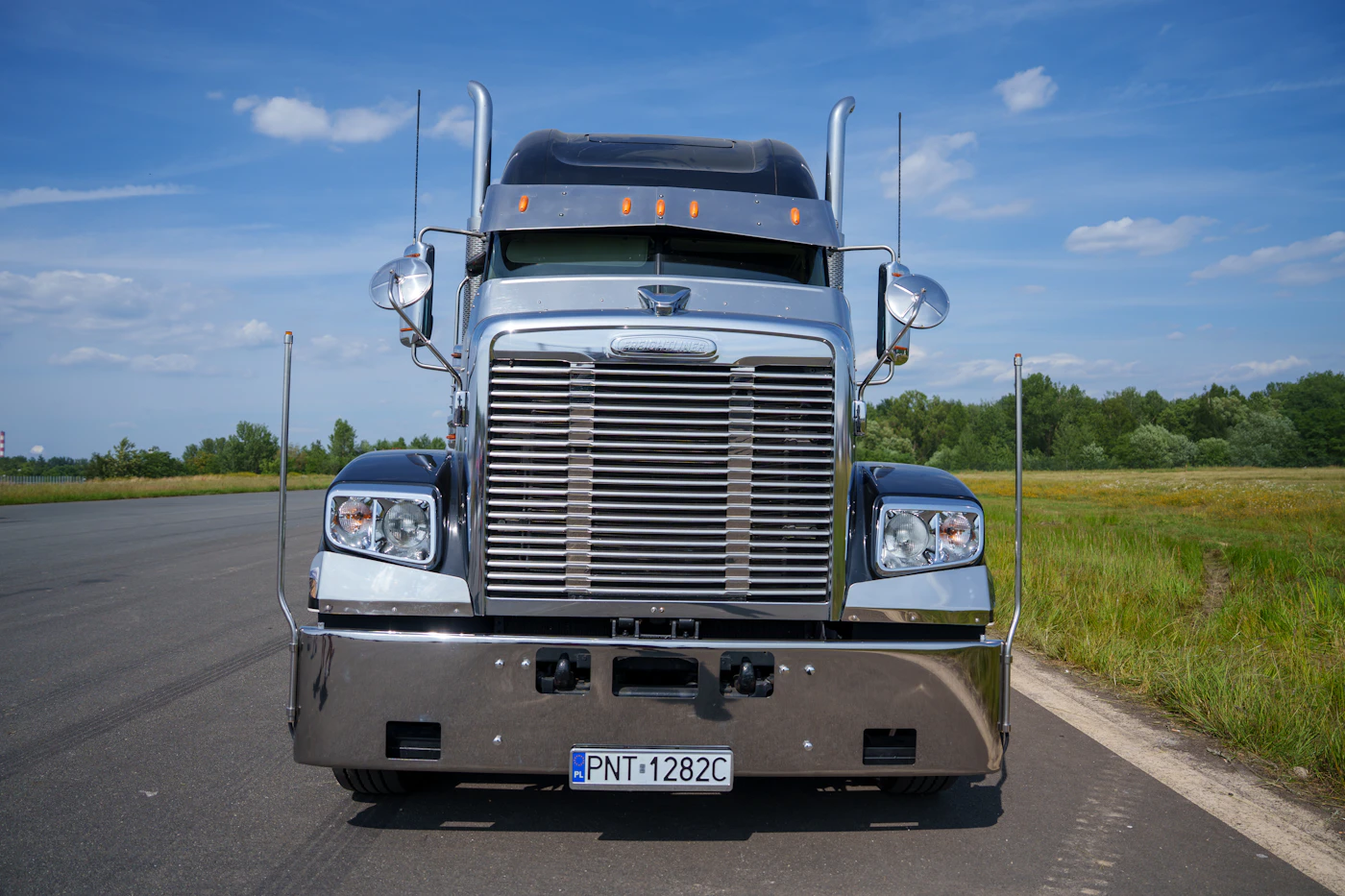
Trucking insurance for one truck or a fleet.
Owner-operators, new authorities and established fleets across the country, hauling locally or across state lines. Liability, cargo and physical damage placed with carriers whose appetite fits your radius, cargo and experience.
By Sam Alishahi · CA Insurance License #4348151 · Reviewed November 2026 · En español · How this page is researched
Carrier appetite is most of the price
Trucking insurers are selective about radius, commodities, vehicle type, driver experience and how long you’ve held authority. The same operation can look very different from one carrier to the next.
My job is to present the operation accurately to the markets that actually want it, and to keep the filings and certificates your customers and brokers require current.
- Auto liabilityInjury and damage you cause to others. Federal rules require interstate for-hire carriers of general freight to carry at least $750,000, and many brokers and shippers require $1M.
- Motor truck cargoLoss of or damage to the freight you haul, with limits and exclusions matched to your commodities.
- Physical damageCollision and comprehensive on tractors and trailers, with any lienholder listed.
- FilingsProof of insurance filed where your operation requires it, such as with the FMCSA for interstate authority or the California DMV for a Motor Carrier Permit.
What underwriters will ask
Having these ready means I can go to market on the first call. The quote form asks for the same things, and anything you don’t know yet can wait.
- Authority: USDOT and MC numbers, and when the authority was granted.
- Equipment: year, make and value of each tractor and trailer.
- Drivers: number of drivers and years of commercial driving experience. I’ll collect license details by phone.
- Operation: radius, states you run in and what you haul.
- Contracts: insurance requirements from brokers, shippers or the carrier you’re leased to.
- History: loss runs for the last three to five years.
The minimum limits: California and federal
A California Motor Carrier Permit carries the liability floor in Vehicle Code 34631.5. Federal rules in 49 CFR 387.9 set floors for interstate for-hire carriers and for hazardous materials carriers. A carrier subject to both must meet both.
- California, most property carriers: $750,000 combined single limit.
- California, carriers operating only vehicles under 10,000 lb GVWR and hauling no bulk petroleum or hazardous materials: $300,000.
- California, intrastate bulk petroleum: $500,000 per person, $1,000,000 per accident and $200,000 property damage, or a $1,200,000 combined single limit.
- California, hazardous materials: the federal amounts in 49 CFR Part 387.
- Federal, 10,001 lb GVWR and up, oil, hazardous waste and other listed hazmat: $1,000,000.
- Federal, bulk hazardous substances in cargo tanks, portable tanks or hoppers, bulk Division 1.1 to 1.3 explosives, certain poison gases and highway route controlled radioactive material: $5,000,000.
The DMV certificate of insurance (MC 65 M) can't be canceled on less than 30 days' written notice to the DMV, and the permit is suspended on the date a cancellation takes effect until a new filing is made. Federal coverage must be in effect before you operate and takes 35 days' written notice to cancel (49 CFR 387.7). For other states' intrastate rules, see truck insurance by state.
Owner-operators and the ABC test
How a California carrier classifies owner-operators shapes which policies fit. Labor Code 2775 presumes that a person paid for labor or services is an employee for purposes of the Labor Code, the Unemployment Insurance Code and the wage orders, unless the hiring entity proves all three parts of the ABC test:
- The worker is free from the hiring entity's control and direction, under the contract and in practice.
- The work is outside the usual course of the hiring entity's business.
- The worker is customarily engaged in an independently established business of the same kind.
Labor Code 2776 carves out bona fide business-to-business relationships. If the contracting business shows all 12 listed criteria, the older Borello test applies instead. The criteria include a written contract stating the payment amount, rate and due date, a business location separate from the carrier's, freedom to contract with other businesses, advertising to the public, supplying your own vehicles and equipment, negotiating your own rates and setting your own hours.
The DMV asks for proof of workers' compensation or a signed exemption with a Motor Carrier Permit application. Classification is a legal question for an employment attorney. Tell me the answer for each driver and I'll match the submission to it.
What a CDL driver's record tells an underwriter
Underwriters read the same records federal rules make carriers collect.
- MVR at hire. Within 30 days of a driver's start date, you must request the driving record from each licensing authority where the driver held a license or permit in the past three years, and ask DOT-regulated employers from the past three years about accidents and drug and alcohol violations (49 CFR 391.23).
- Annual MVR review. At least once every 12 months, pull and review each driver's record. The rule says to give great weight to violations such as speeding, reckless driving and driving under the influence, and to note who did the review and when (49 CFR 391.25).
- PSP. FMCSA's Pre-Employment Screening Program releases a driver's crash reports and roadside inspection reports, including serious driver violations, only with the driver's written consent. Using it is not mandatory (49 U.S.C. 31150).
- Drug and Alcohol Clearinghouse. Run a full query, with the driver's consent, before a CDL driver performs safety-sensitive work, and query every driver at least once a year; a limited query is allowed for the annual check. A driver with a recorded violation can't do safety-sensitive work until the return-to-duty process is done. Keep query records three years (49 CFR 382.701).
Send me the driver list and any MVRs you've pulled. New carriers can start with the new authority guide.
Trucking insurance, answered
What’s non-trucking liability?
Coverage for an owner-operator leased to a motor carrier when the truck is used outside of dispatch, where the carrier’s liability coverage doesn’t apply. It isn’t coverage for driving under dispatch.
Why is insurance for a new authority so expensive?
Carriers have no loss history for the business, so they rely on driver experience, equipment, radius and commodities. Some markets won’t write new authorities at all, which is why shopping widely matters.
Is occupational accident the same as workers’ comp?
No. Occupational accident is a separate policy often used by independent owner-operators. Whether workers’ comp applies depends on how you’re classified, which is a question for the carrier you’re leased to and your advisors.
Do you work with trucking companies outside California?
Yes. Send the request the same way. Sam Alishahi is licensed in all 50 states and Washington, DC and places policies there directly.
Does California's Clean Truck Check apply to out-of-state trucks?
Yes. CARB says it applies to nearly all diesel and alternative-fuel trucks over 14,000 lb GVWR operating on California public roads, including vehicles registered outside California; out-of-state motorhomes are the exception.
Is a PSP report required before hiring a CDL driver?
No. Federal law says use of the Pre-Employment Screening Program is not mandatory, and a report can't be run without the driver's written consent. The MVR inquiry and the Clearinghouse pre-employment query are required.
Official sources
- Cal. Vehicle Code 34631.5 (california.public.law)
- 49 CFR 387.9, minimum levels of financial responsibility (Cornell LII)
- 49 CFR 387.7, financial responsibility required (Cornell LII)
- California DMV, Motor Carrier Permits
- Cal. Vehicle Code 34501.12, BIT program (california.public.law)
- CARB, Clean Truck Check FAQ
- CARB, Truck and Bus Regulation
- Cal. Labor Code 2775 and 2776 (california.public.law)
- IRMI glossary: trailer interchange, bobtail liability, unladen liability, motor truck cargo
- 49 CFR 382.701, 391.23, 391.25 and 49 U.S.C. 31150 (Cornell LII)
Send your DOT number and what you haul.
That, your equipment list and your drivers’ experience are enough to tell you which markets fit.
Alishahi Insurance · Saman Alishahi, independent insurance broker, California License #4348151. General information, not a quote or a promise of coverage; coverage depends on underwriting and the terms, conditions and exclusions of the policy actually issued.
Tell me how to reach you. I’ll take it from there.
Takes about 30 seconds. Your next step comes by email, and you get an update at every step until your quotes are ready.
(877) 711-4545Answered 24/7 · CA License #4348151
Get a reminder before your renewal.
Tell me when your policy renews and I’ll email you about six weeks before, when it’s worth comparing. One email, no calls.