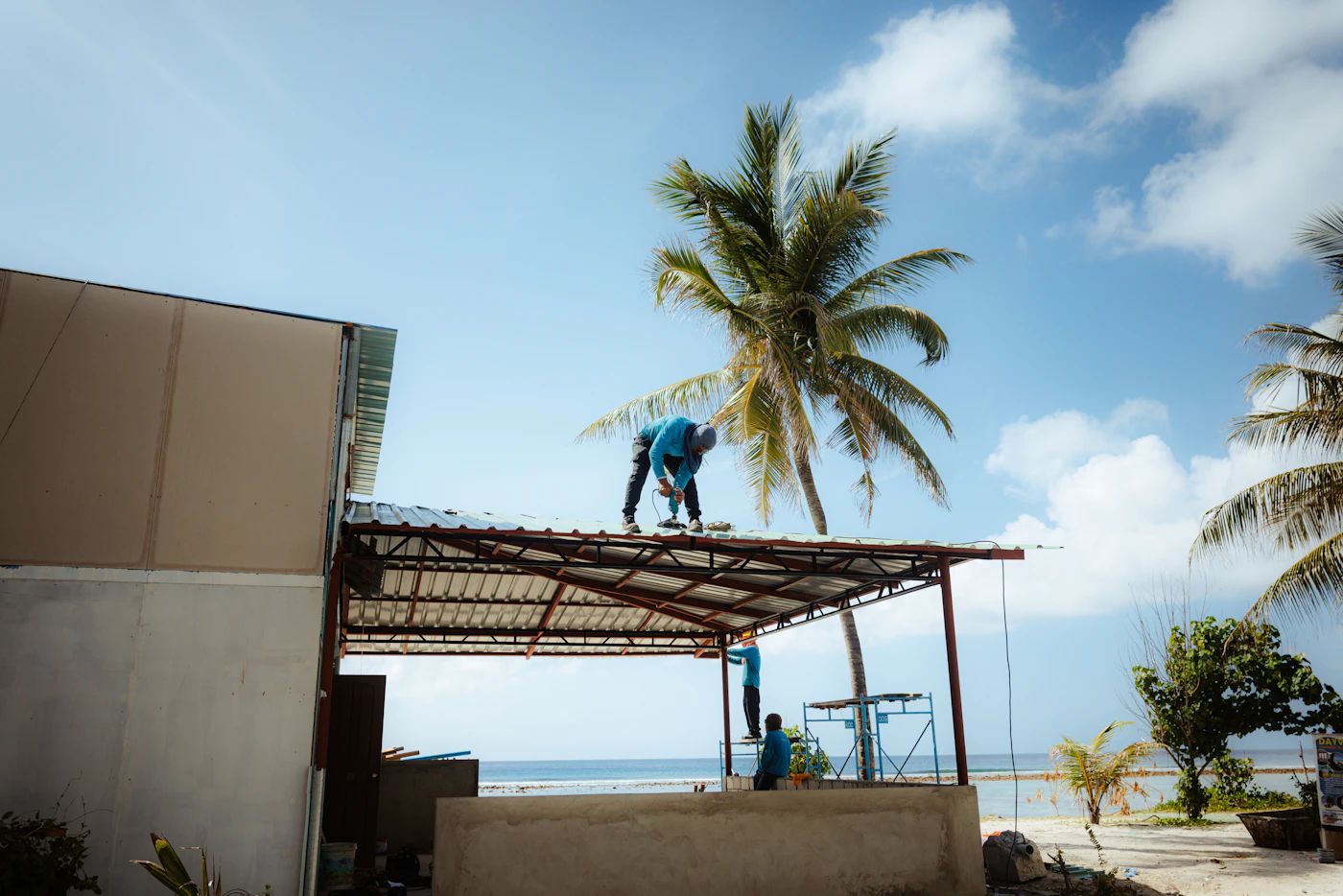
Earthwork coverage for what's underground.
General liability that covers underground utilities, heavy equipment, workers' comp and commercial auto for excavation, grading, trenching and demolition contractors.
By Sam Alishahi · CA Insurance License #4348151 · Reviewed November 2026 · En español · How this page is researched
One cut line can cost more than the job
Hitting a gas, water or fiber line is the claim excavation contractors worry about most, and some liability policies exclude underground damage unless it's added back. Collapse and subsidence are other common exclusions.
I place earthwork contractors with carriers that write the class and check those exclusions first, then insure the equipment, often the largest asset in the business.
- General liabilityIncluding underground utility damage, collapse and subsidence.
- Contractors' equipmentExcavators, loaders, dozers and trailers.
- Workers' compOperators, laborers and trench crews.
- Commercial autoDump trucks and equipment haulers.
What underwriters will ask
Having these ready means I can go to market on the first call. The quote form asks for the same things, and anything you don’t know yet can wait.
- Work: excavation, grading, trenching, paving or demolition, with rough percentages.
- Depth: the deepest you dig and whether you do shoring.
- Equipment: a list of machines with values, owned and rented.
- License: your CSLB license and classifications.
- Payroll and revenue: employees, subcontractors and gross receipts.
- History: current policies and loss runs.
The 811 ticket, step by step
California's one-call law, Government Code Sections 4216 through 4216.24, defines excavation broadly: grading, trenching, digging, ditching, drilling, augering, tunneling, scraping, and cable or pipe plowing and driving all count. I treat each step as part of your claim file.
- Delineate before you call. The law defines delineation as marking the proposed dig area or path in white, following the Common Ground Alliance's guidelines. Flags, stakes, or whiskers may substitute in some cases. Without delineation, an operator may decline to mark until it is done.
- Notify inside the window. Except in an emergency, notice goes to the regional notification center at least two working days, and not more than 14 calendar days, before you dig. The day you notify does not count. A working day is Monday through Friday, 7:00 a.m. to 5:00 p.m., excluding federal and state holidays.
- Wait for every operator. Barring an emergency, you cannot dig until every operator listed on the ticket has marked its lines, given you location information, or told you it has nothing in the area. Within 10 feet of a high priority installation, the operator sets up an onsite meeting, and you wait until that meeting is done.
- Track the 28 days. A ticket is valid for 28 days from issuance; renew it online or by calling 811 by the end of the 28th day. If a ticket expires mid-job, stop at once, get a new ticket, and wait for the operators again.
Outside California the details vary by state. Federal OSHA's, 29 CFR 1926.651(b), requires the estimated location of underground utilities to be determined before an excavation is opened, and utility owners to be contacted within established or customary local response times. Cal/OSHA's protective system and permit rules are on my pool contractor page.
Dig law penalties and who enforces them
Government Code 4216.6 sets the civil penalty ceilings for operators and excavators:
- Negligent violation: up to $10,000.
- Knowing and willful violation: up to $50,000.
- Knowing and willful violation that damages a gas or hazardous liquid pipeline and lets flammable, toxic, or corrosive gas or liquid escape: up to $100,000.
The section is not meant to affect civil claims for personal injury or property damage.
For contractors, Section 4216.6 names the Registrar of Contractors, acting on a Dig Safe Board recommendation or its own investigation. The Dig Safe Board enforces directly against persons not assigned to another agency. Under Section 4216.19 the board investigates possible violations and may look into reports of excavator downtime, damage, near misses, and complaints. When it finds a probable violation by a contractor, it sends the results and any recommended penalty to the enforcing agency.
Sanctions are graduated: notification and information letters, direction to attend education, and financial penalties. In weighing citations and penalties, the board considers the type and gravity of the violation, the degree of culpability, your history of violations and of violation-free work, and what you did to prevent the violation and limit its safety consequences.
Stormwater permits on an acre or more
In California, the State Water Resources Control Board's Construction Stormwater General Permit (Order WQ 2022-0057-DWQ) covers construction that disturbs one or more acres, or less than one acre that is part of a larger common plan of development or sale totaling one or more acres.
The discharger is responsible for compliance, including work done by its QSDs, QSPs, and QSP delegates. The discharger is a party with a real property interest in the land or, for linear underground and overhead projects, the owner or operator of the line. Before construction starts, it obtains a WDID number by submitting a Notice of Intent, site drawings and maps, a Stormwater Pollution Prevention Plan (SWPPP), and other documents through the SMARTS system.
- QSD: a Qualified SWPPP Developer writes, amends, and certifies the SWPPP and must be retained from the beginning of the project through Notice of Termination approval.
- QSP: a Qualified SWPPP Practitioner inspects the site at least once every calendar month and within 72 hours before a forecasted qualifying precipitation event, and verifies that every best management practice in the SWPPP is installed and maintained.
- On site: the SWPPP stays on the site from initial mobilization until coverage ends.
If your subcontract makes you install or maintain erosion and sediment controls, get that scope in writing, and ask whether your contractor's pollution liability addresses sediment runoff from your work.
Excavation contractor insurance, answered
Does my policy cover hitting an underground line?
Only if it includes underground damage, sometimes called the U in XCU. Some contractor policies exclude it, so it's the first thing I check.
What is XCU?
Explosion, collapse and underground damage. Excavation work needs all three covered.
Is rented equipment covered?
It can be, under contractors' equipment with rented-equipment coverage. Rental agreements usually require it.
Do I have to call before digging?
Yes. California requires contacting 811 before excavating. Carriers expect it, and it helps your defense if a line is hit.
Do you offer excavation contractor insurance outside California?
Yes. Clients across the country send the same quote form. Sam Alishahi is licensed in all 50 states and Washington, DC and places policies there directly. The shopping across carriers works the same way. Rules, minimums and markets differ by state — see insurance requirements by state.
Official sources
- California Government Code 4216 (definitions: excavation, delineate, tolerance zone, working day)
- California Government Code 4216.2 (delineation, notice window, waiting for operators, ticket life)
- California Government Code 4216.3 (operator locate and mark duties, remarks)
- California Government Code 4216.4 (tolerance zone excavation, damage notification)
- California Government Code 4216.6 (civil penalties and enforcing agencies)
- California Government Code 4216.7 (liability of excavators and operators)
- California Government Code 4216.19 (Dig Safe Board investigations and sanctions)
- Cal/OSHA Title 8, Section 2946: Provisions for Preventing Accidents Due to Proximity to Overhead Lines
- State Water Resources Control Board, Order WQ 2022-0057-DWQ, Construction Stormwater General Permit
- 29 CFR 1926.651 Specific excavation requirements (Cornell LII)
Send your work and equipment. I'll shop it.
Work types, an equipment list and your current declarations page are enough to start.
Alishahi Insurance · Saman Alishahi, independent insurance broker, California License #4348151. General information, not a quote or a promise of coverage; coverage depends on underwriting and the terms, conditions and exclusions of the policy actually issued. Some policies may be placed with nonadmitted (surplus lines) insurers, which are not members of the California Insurance Guarantee Association (CIGA).
Tell me how to reach you. I’ll take it from there.
Takes about 30 seconds. Your next step comes by email, and you get an update at every step until your quotes are ready.
(877) 711-4545Answered 24/7 · CA License #4348151
Get a reminder before your renewal.
Tell me when your policy renews and I’ll email you about six weeks before, when it’s worth comparing. One email, no calls.