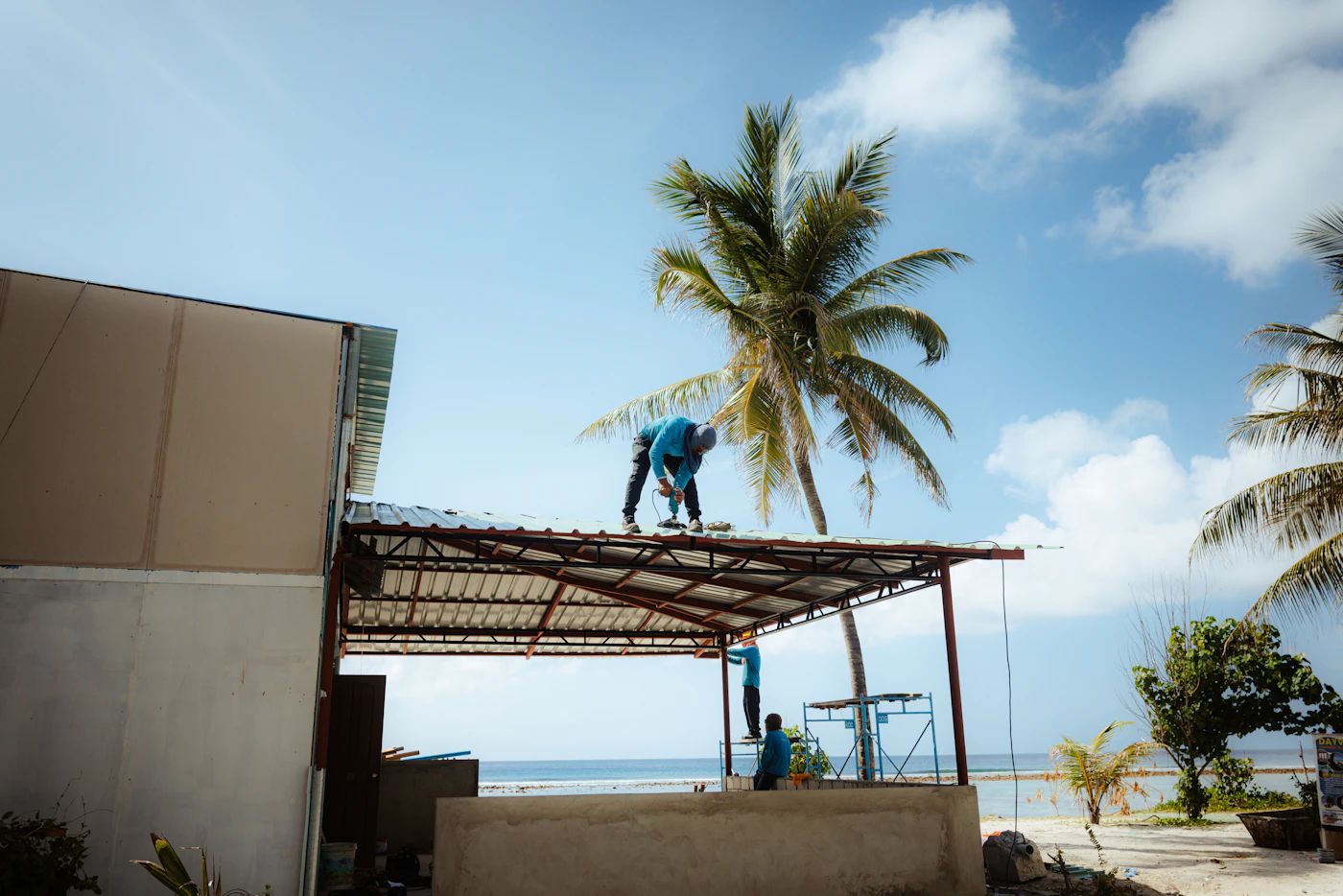
Painting insurance for every coat.
General liability, workers' compensation, commercial auto and CSLB bonds for interior and exterior painting contractors.
By Sam Alishahi · CA Insurance License #4348151 · Reviewed November 2026 · En español · How this page is researched
What painters need covered
Painters face ladder and scaffold falls, overspray on cars and neighboring homes, and damage to finished interiors. General contractors and property managers will ask for a certificate before you start.
Workers' comp is required as soon as you have employees, and California's 2028 law will require it for all contractors. I place painting contractors with carriers that write the trade, including spray and high-work exposures.
- General liabilityOverspray, spills and damage to property.
- Workers' compRequired with employees, and for all contractors from 2028.
- Commercial autoTrucks and vans that carry crews and materials.
- License bondThe bond CSLB requires.
What underwriters will ask
Having these ready means I can go to market on the first call. The quote form asks for the same things, and anything you don’t know yet can wait.
- License: CSLB number and classifications.
- Work: interior, exterior, residential or commercial.
- Methods: spraying, sandblasting or lead paint.
- Height: the tallest buildings you paint.
- Payroll and revenue: employees and gross receipts.
- History: current policies and claims.
The C-33 scope, word for word
In California, CSLB's C-33 Painting and Decorating Contractor classification (Title 16, Division 8, Article 3) says a painting and decorating contractor "prepares by scraping, sandblasting or other means and applies" paints, papers, textures, fabrics, varnishes, shellacs, stains, fillers, waxes, adhesives and the other listed materials "to the surfaces of structures and the appurtenances thereto for purposes of decorating, protecting, fireproofing and waterproofing." Other states define painting work their own way, so check your state's contractor board.
Two parts of that wording matter when I describe a painter's operations to an underwriter:
- Surface prep is part of the trade. Scraping and sandblasting are named in the scope, and they come back in the lead rules below: EPA restricts blasting on painted surfaces, and Cal/OSHA lists manual scraping and abrasive blasting as trigger tasks. If your crews blast, name it on the application.
- Fireproofing and waterproofing count. If you apply fireproofing or waterproofing coatings, describe them separately so the rated operations match your work.
California's CDPH lead certification is a separate credential
The California Department of Public Health runs its own Lead-Related Construction (LRC) certification. It is not EPA's RRP certificate, and CDPH says training alone does not count as LRC certification. Its page lists when certification is required:
- Being paid for lead inspections, risk assessments or clearance inspections in residential or public buildings.
- Designing plans to abate lead-based paint, lead dust or lead soil (Lead Supervisor or Project Monitor), or doing work designed to reduce or eliminate them (Lead Supervisor or Worker).
- Inspecting for lead or reducing lead hazards in a public elementary school, preschool or daycare center (Education Code section 32243(b)).
- Work in residential or public buildings at the airborne-lead level covered by Cal/OSHA's lead standard (below), plus HUD projects and jobs whose specifications require it.
CDPH says certification is not required for interim controls designed to last less than 20 years, though other Title 17 rules still apply. If a bid packet asks for CDPH-certified workers, confirm who on your crew holds it before you bid. If you take on lead reduction work, look at pollution liability too.
Reading the CGL for lead and your own work
What to read for in a general liability quote, based on IRMI's descriptions of the standard forms:
- The pollution wording. IRMI notes the standard post-1986 ISO exclusion still preserves some coverage, including certain off-premises work by contractors. The total pollution endorsements CG 21 49, CG 21 55 and CG 21 65 eliminate virtually all of it, with different exceptions. If one is attached, ask which one.
- Lead by name. Courts split on whether lead is a pollutant. In a landlord's CGL case, Georgia's Supreme Court held in 2016 that lead-based paint was one; IRMI notes a 1995 Maryland appellate decision held it was not. A separate lead exclusion endorsement takes the question off the table, so look for one.
- "That particular part." Exclusions j(5) and j(6) remove property damage to the particular part of real property you are working on, or that must be redone because your work was done wrong. Courts disagree on how far the phrase reaches, from only the component you worked on to everything within your work, so read it alongside your contracts.
Painting contractor insurance, answered
Does liability cover overspray on a car?
Damage to other people's property caused by your work is generally covered by general liability, subject to the policy terms.
Do painters need workers' comp?
Yes, with employees. From 2028, California will require it for all licensed contractors.
What about lead paint?
Many liability policies exclude pollution, including lead. Contractors pollution liability can fill that gap.
Can I get a certificate the same day?
Often yes, once a policy is bound.
How long does EPA RRP certification last?
A firm's EPA certificate expires no more than 5 years after approval, and EPA says to apply for re-certification at least 90 days before it expires. A renovator who takes a refresher with hands-on training is certified for 5 years; a refresher without hands-on training gives 3 years.
Do you offer painting contractor insurance outside California?
Yes. Clients across the country send the same quote form. Sam Alishahi is licensed in all 50 states and Washington, DC and places policies there directly. The shopping across carriers works the same way. Rules, minimums and markets differ by state — see insurance requirements by state.
Official sources
- CSLB: C-33 Painting and Decorating Contractor
- eCFR: 40 CFR Part 745 Subpart E (Residential Property Renovation)
- eCFR: 40 CFR 745.103 (target housing definition)
- EPA: Lead Renovation, Repair and Painting Program
- EPA: RRP Program Firm Certification
- CDPH: Is Lead Certification Required for the Work I Do?
- Cal/OSHA (DIR): Title 8, Section 1532.1 Lead
- Occupational Safety and Health Standards Board: Lead rulemaking
- IRMI: total pollution exclusion
- IRMI: More Confusion Regarding the Damage to Property Exclusion
Send your license number. I'll shop it.
Your CSLB number, payroll and revenue are enough to start.
Alishahi Insurance · Saman Alishahi, independent insurance broker, California License #4348151. General information, not a quote or a promise of coverage; coverage depends on underwriting and the terms, conditions and exclusions of the policy actually issued. Some policies may be placed with nonadmitted (surplus lines) insurers, which are not members of the California Insurance Guarantee Association (CIGA).
Tell me how to reach you. I’ll take it from there.
Takes about 30 seconds. Your next step comes by email, and you get an update at every step until your quotes are ready.
(877) 711-4545Answered 24/7 · CA License #4348151
Get a reminder before your renewal.
Tell me when your policy renews and I’ll email you about six weeks before, when it’s worth comparing. One email, no calls.