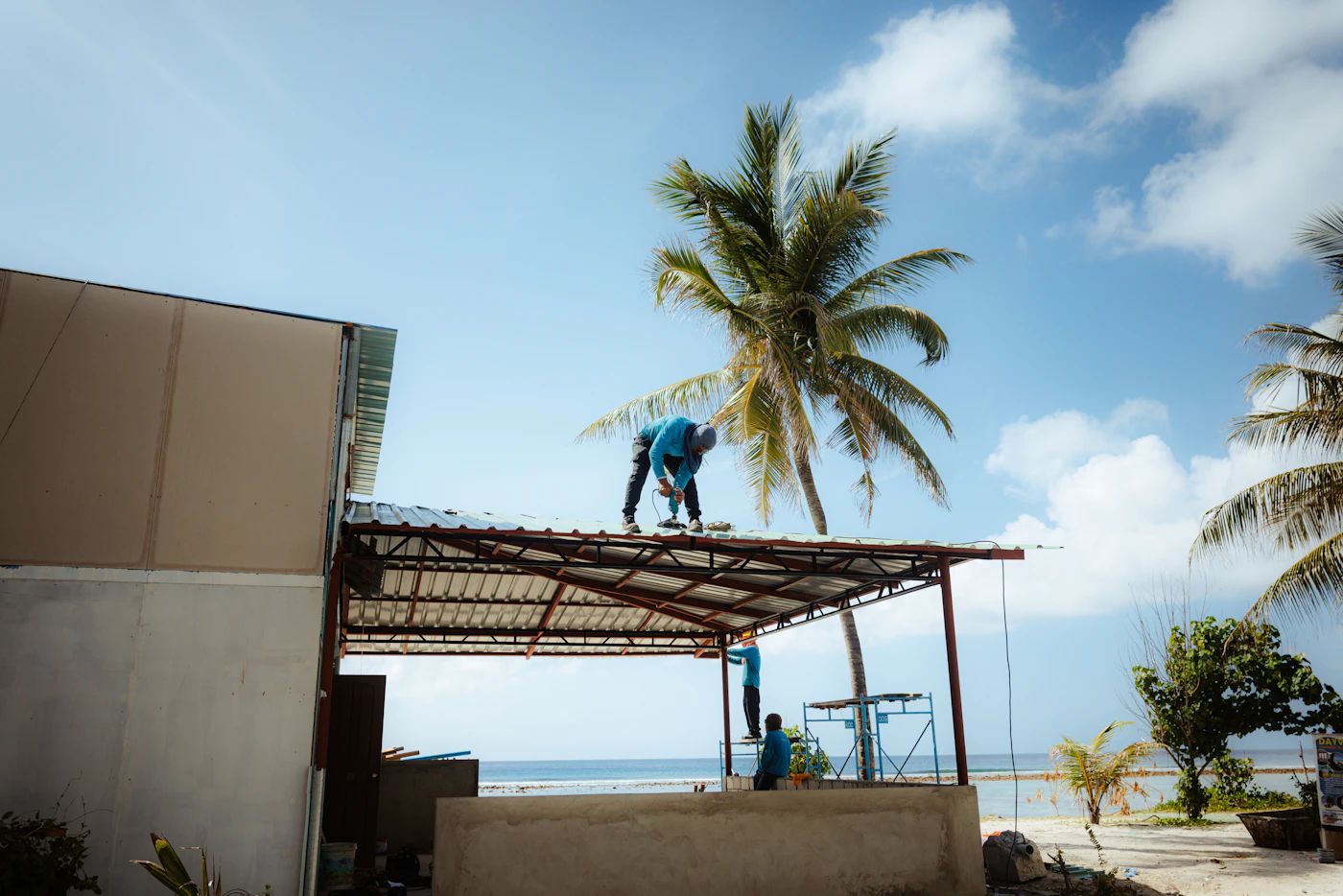
Built to last. Insured to match.
Coverage for custom home builders, spec builders, ADU builders and general contractors doing residential and commercial work.
By Sam Alishahi · CA Insurance License #4348151 · Reviewed November 2026 · En español · How this page is researched
Your exposure outlasts the job
In California, construction defect claims can surface years after a home is finished: the Right to Repair Act (SB 800) sets a process for them, and latent defect claims can be brought up to ten years after completion. That's why residential builders need GL written for completed operations and why many standard markets avoid new residential construction.
Larger projects may use a wrap-up (OCIP or CCIP) that insures everyone on site under one program, and owners often require an owners and contractors protective (OCP) policy. I place builder GL, builder's risk, wrap-ups and workers' comp with markets that write residential construction.
- General liabilityIncluding completed operations for construction defects.
- Builder's riskThe structure and materials during construction.
- Wrap-ups and OCPProject-specific programs owners require.
- Workers' compYour crews, and verification of subs' coverage.
What underwriters will ask
Having these ready means I can go to market on the first call. The quote form asks for the same things, and anything you don’t know yet can wait.
- License: CSLB B license and years in business.
- Work: new construction vs. remodel, residential vs. commercial.
- Projects: number of homes per year and average value.
- Subcontractors: costs, contracts and insurance you require.
- Completed projects: homes finished in the last ten years.
- History: current policies and claims, including defect claims.
The SB 800 claim clock, day by day
California's Right to Repair Act (Civil Code 895 and following) covers new homes whose purchase agreement the seller signed on or after January 1, 2003 (938). Before suing over the 896 standards, the homeowner must send you written notice by certified mail, overnight mail or personal delivery (910). Then the clocks run:
- 14 days after receiving the notice to acknowledge it in writing (913).
- 14 days after acknowledging to finish the initial inspection and testing if you inspect, restoring the home within 48 hours. A second inspection needs written reasons within 3 days and must be done within 40 days of the first (916).
- 30 days after the initial or second inspection to make a written repair offer, if you choose to offer. Named repair contractors must be fully insured, with proof on request (917). The offer must include an offer to mediate, held within 15 days of the homeowner's request (919).
- 30 days for the homeowner to accept or ask for alternative contractors (918).
- Repairs start within 14 days of acceptance, 7 days after a mediation, or 5 days after a required permit, and every effort must be made to finish within 120 days (921).
You must give written proof of liability insurance for the inspection (916(a)). Miss the acknowledgment, inspection or repair-offer deadline and the homeowner can file suit (915, 916(d), 920). If you'll hold a sub responsible, notify it in time to attend (916(e)). Send me any 910 notice the day it arrives.
Which deadline ends your exposure
Two statutes set how long a finished home can produce claims:
- Civil Code 941. No action under the Right to Repair Act more than 10 years after substantial completion (941(a)). Repairs made through the claim process don't extend the time to file, apart from the tolling in Section 927 (941(e)).
- Shorter windows in 896. From close of escrow: plumbing, sewer, electrical and hardscape at 4 years, paint and stains at 5, dryer ducts and untreated wood posts at 2, and irrigation and drainage at 1.
- Code of Civil Procedure 337.15. Section 941(d) takes Act claims out of 337.15, but it still covers other latent-deficiency suits against developers and builders. Its 10 years start at substantial completion, but no later than the earliest of final inspection, a recorded notice of completion, use or occupation, or one year after work stops (337.15(g)). It doesn't apply to willful misconduct or fraudulent concealment (337.15(f)).
Both statutes allow indemnity cross-complaints in a case filed on time (941(b), 337.15(c)). Keep the carrier, policy number and dates of every general liability and umbrella policy for at least ten years after your last closing. Call me before switching carriers or winding down. Repose rules vary by state.
Running a wrap-up on a residential project
For a residential wrap-up, the Civil Code sets what you can ask of enrolled subs and what you must tell them:
- No indemnity for covered claims. In contracts entered into after January 1, 2009, a clause requiring an enrolled sub to indemnify, hold harmless or defend against a claim the program covers is unenforceable (2782.9(a)).
- Deductible contributions. You can require a reasonably allocated contribution to the self-insured retention or deductible if the contract discloses the maximum and how it's collected. You collect only as the cost is incurred, in proportion to claims tied to the sub's work, after written notice of the amount and basis, and never more in total than the retention or deductible due (2782.9(b)).
- Premium credit. The contract documents must state the premium credit required from each sub or how it's calculated. If it isn't disclosed before bidding, a sub isn't bound by its bid unless it may raise it by the difference (2782.95(a), (d)).
- Policy facts. To the extent known, disclose limits, scope, term, the deductible or occurrence trigger, a dated good-faith estimate of remaining limits from the insurer and, for multi-project policies, the unit count on the application (2782.95(b)). Subs can request a policy copy, or a binder until one exists (2782.95(c)).
The 2782.95 rules apply to private residential work first started after January 1, 2009. When I place a builder wrap-up, I request the remaining-limits estimate from the insurer in writing. Public works and nonresidential wrap-ups follow 2782.96 instead.
Home builder insurance, answered
Why is new residential construction hard to insure?
Construction defect claims can arise years after completion, so many carriers avoid it. Specialty markets write builders with completed-operations coverage.
What is a wrap-up?
An owner- or contractor-controlled insurance program (OCIP or CCIP) that covers the owner, general contractor and subcontractors on a single project.
What is OCP insurance?
Owners and contractors protective liability protects the project owner for claims arising from the contractor's work; owners often require it.
What do underwriters rate on?
Type of work, project values, volume, subcontractor controls and claims history.
Does the Right to Repair Act apply to a contractor who only built the house?
The claim process runs against the "builder," meaning a party in the business of selling homes to the public or building homes for public purchase (Civil Code 911(a)). A nonaffiliated general contractor whose only role was building the home is treated like a subcontractor (911(b)).
Do you offer home builder insurance outside California?
Yes. Clients across the country send the same quote form. Sam Alishahi is licensed in all 50 states and Washington, DC and places policies there directly. The shopping across carriers works the same way. Rules, minimums and markets differ by state — see insurance requirements by state.
Official sources
- Cal. Civil Code 910 (claim notice)
- Cal. Civil Code 912 (builder document duties)
- Cal. Civil Code 916 (inspection timelines)
- Cal. Civil Code 917 (repair offer)
- Cal. Civil Code 921 (repair timelines)
- Cal. Civil Code 941 (10-year limit)
- Cal. Civil Code 896 (functionality standards)
- Cal. Code of Civil Procedure 337.15 (latent deficiency)
- Cal. Civil Code 2782 (construction indemnity)
- Cal. Civil Code 2782.95 (residential wrap-up disclosures)
Tell me about your projects. I'll shop it.
Your license, project types and annual volume are enough to start.
Alishahi Insurance · Saman Alishahi, independent insurance broker, California License #4348151. General information, not a quote or a promise of coverage; coverage depends on underwriting and the terms, conditions and exclusions of the policy actually issued. Some policies may be placed with nonadmitted (surplus lines) insurers, which are not members of the California Insurance Guarantee Association (CIGA).
Tell me how to reach you. I’ll take it from there.
Takes about 30 seconds. Your next step comes by email, and you get an update at every step until your quotes are ready.
(877) 711-4545Answered 24/7 · CA License #4348151
Get a reminder before your renewal.
Tell me when your policy renews and I’ll email you about six weeks before, when it’s worth comparing. One email, no calls.