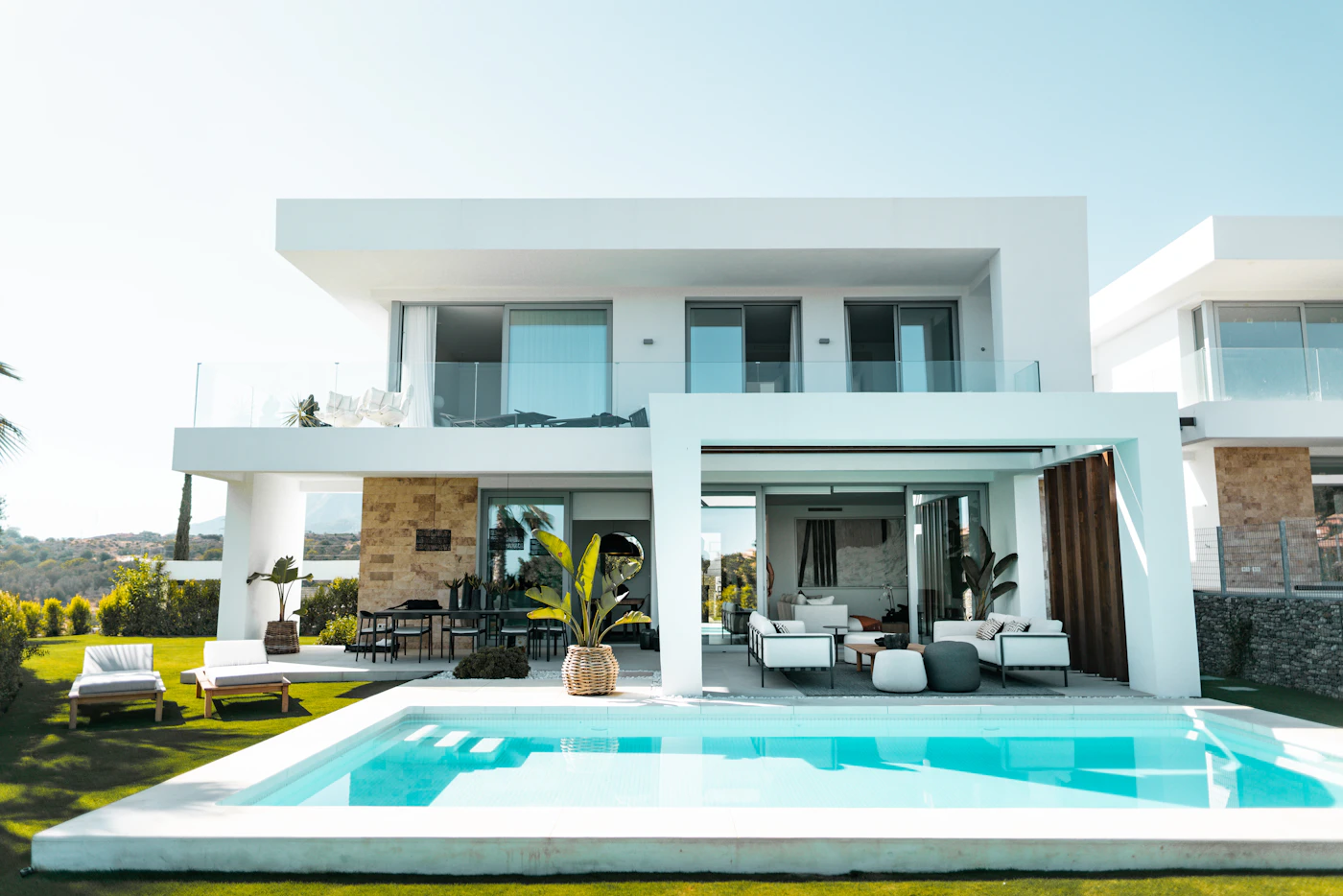
ADU insurance for how the unit is used.
Accessory dwelling units and guest houses, insured while they're built and after, whether family lives there, you rent it long term or you host guests.
By Sam Alishahi · CA Insurance License #4348151 · Reviewed November 2026 · How this page is researched
An ADU can outgrow your homeowners policy
A homeowners policy usually covers detached structures under an "other structures" limit set as a share of the main home's coverage. A finished ADU can be worth more than that limit.
How the unit is used matters too. Renting it to a tenant or to short-term guests can call for landlord or rental coverage. I match the coverage to the unit and its use.
- While it's builtBuilder's risk for the structure and materials during construction.
- Family living thereEnough other-structures or dwelling coverage for the unit's rebuild cost.
- Rented long termLandlord coverage with liability and loss of rents.
- Rented short termCoverage that names short-term rental use.
What underwriters will ask
Having these ready means I can go to market on the first call. The quote form asks for the same things, and anything you don’t know yet can wait.
- The unit: detached, attached or converted garage, and square footage.
- Stage: planned, under construction or finished.
- Use: family, long-term tenant or short-term guests.
- Build cost: contract amount or estimate.
- Current policy: declarations page for the main home.
- Timing: construction start or completion date.
What California ADU law settles for you
Before I quote an ADU, I need to know how the unit can legally be used, because use is what the policy is built around. ADU rules vary by state and city. HCD notes that SB 477 (Chapter 7, Statutes of 2024) renumbered the Government Code sections on state ADU and JADU law as of March 25, 2024, so older guides may cite section numbers that have since changed.
- Minimum rental terms. For an ADU on a lot with a single-family home, Government Code 66315 lets a city or county require that the property be used for rentals of terms of 30 days or longer. For an ADU created under the ministerial path in 66323, the agency must require that any rental be for a term longer than 30 days (66323(e)). A local junior ADU ordinance must also require rentals longer than 30 days (66333(g)). If one applies, a nightly-guest policy may not fit the unit. Check your permit and local ordinance before we choose between landlord coverage and a policy written for short-term guests.
- No owner-occupancy rule for an ADU. Section 66315 bars a city or county from adding standards beyond 66314, including an owner-occupant requirement. You can rent the main house and the ADU and live elsewhere. If you do, tell me, because the application should show both units as rented.
- Owner occupancy for some junior ADUs. Under 66333(b), if a JADU shares sanitation facilities with the main home, the owner must live in either the remaining part of the home or the JADU. Under 66333(c), a deed restriction that runs with the land bars selling the JADU separately from the home.
- Sprinklers follow the main house. Under 66314(d)(12) and 66323(d), an ADU doesn't need fire sprinklers if the primary residence doesn't. Underwriters still ask about protection features, so tell me what's actually installed.
Renting the ADU: tenant law that shapes your risk
California's Tenant Protection Act has two parts, and an ADU can fall inside one and outside the other.
- Just-cause eviction (Civil Code 1946.2). It applies once a tenant has continuously and lawfully occupied the property for 12 months. If you end a tenancy for a no-fault reason, you owe relocation assistance equal to one month's rent, paid within 15 calendar days of serving the notice, or a written waiver of the final month's rent. If you don't strictly comply, the notice is void. The exemption in 1946.2(e)(5) covers an owner-occupied single-family home where the owner rents or leases no more than two units or bedrooms, including an ADU or JADU.
- Rent cap (Civil Code 1947.12). The rent cap has no matching owner-occupied single-family exemption. Its owner-occupied two-unit exemption in 1947.12(d)(6) does not apply if either unit is an ADU or JADU.
- Newer construction. Both sections exempt housing issued a certificate of occupancy within the previous 15 years (1946.2(e)(7) and 1947.12(d)(4)). Keep your ADU's certificate of occupancy with your policy documents.
Local rent ordinances can be stricter than state law, so check your city too. When you apply, tell me whether you live on the property, how long the current tenant has been there, and whether the lease requires the tenant to carry their own coverage. Those facts drive how the unit is written. More detail is on my pages on California landlord rules and liability and requiring renters insurance.
ADU insurance, answered
Does homeowners insurance cover an ADU?
Usually under an other-structures limit, which is often a share of the main home's dwelling coverage. If the ADU is worth more, that limit can fall short. Some carriers can add the ADU with its own coverage amount.
Do I need builder's risk to build an ADU?
Often, yes. Your homeowners policy may not cover the structure and materials while they're being built, and lenders or contractors may require builder's risk.
What if I rent my ADU?
Renting it to a tenant can call for landlord coverage for that unit, and renting to short-term guests can call for a policy that names short-term rental use.
Does my tenant need insurance?
Your policy doesn't cover a tenant's belongings. Many landlords require renters insurance in the lease.
Can I rent my ADU on Airbnb in California?
It depends on your city and how the unit was approved. Government Code 66315 lets a city or county require rentals of 30 days or longer, an ADU created under 66323 must be rented for terms longer than 30 days, and a local junior ADU ordinance must require the same (66333(g)).
Is a California ADU tenant covered by the statewide rent cap?
Civil Code 1947.12 has no exemption for an ADU just because the owner lives on the property, and its owner-occupied two-unit exemption excludes ADUs and JADUs. Housing issued a certificate of occupancy within the previous 15 years is exempt. Local ordinances can be stricter.
Do you offer ADU insurance outside California?
Yes. Clients across the country send the same quote form. Sam Alishahi is licensed in all 50 states and Washington, DC and places policies there directly. The shopping across carriers works the same way. Rules, minimums and markets differ by state — see insurance requirements by state or high-value home insurance by state.
Official sources
- Cal. Gov. Code 66314 (ADU standards; separate rental, no separate sale, sprinklers, garage demolition permit)
- Cal. Gov. Code 66315 (no owner-occupant requirement; 30-day rental option)
- Cal. Gov. Code 66323 (ministerial ADUs; rentals longer than 30 days; sprinklers)
- Cal. Gov. Code 66333 (JADU owner occupancy, deed restriction, rental term)
- Cal. Gov. Code 66341 (required separate sale of nonprofit-built ADUs)
- Cal. Gov. Code 66342 (optional local ADU condominium ordinances)
- Cal. Civil Code 1946.2 (just-cause eviction)
- Cal. Civil Code 1947.12 (rent cap)
- CSLB: Owner-Builder Responsibilities
- HCD: Accessory Dwelling Units (SB 477 renumbering, March 25, 2024)
Tell me about the unit. I'll match the coverage.
The address, the unit's size and how it's used are enough to start.
Alishahi Insurance · Saman Alishahi, independent insurance broker, California License #4348151. General information, not a quote or a promise of coverage; coverage depends on underwriting and the terms, conditions and exclusions of the policy actually issued.
Tell me how to reach you. I’ll take it from there.
Takes about 30 seconds. Your next step comes by email, and you get an update at every step until your quotes are ready.
(877) 711-4545Answered 24/7 · CA License #4348151
Get a reminder before your renewal.
Tell me when your policy renews and I’ll email you about six weeks before, when it’s worth comparing. One email, no calls.