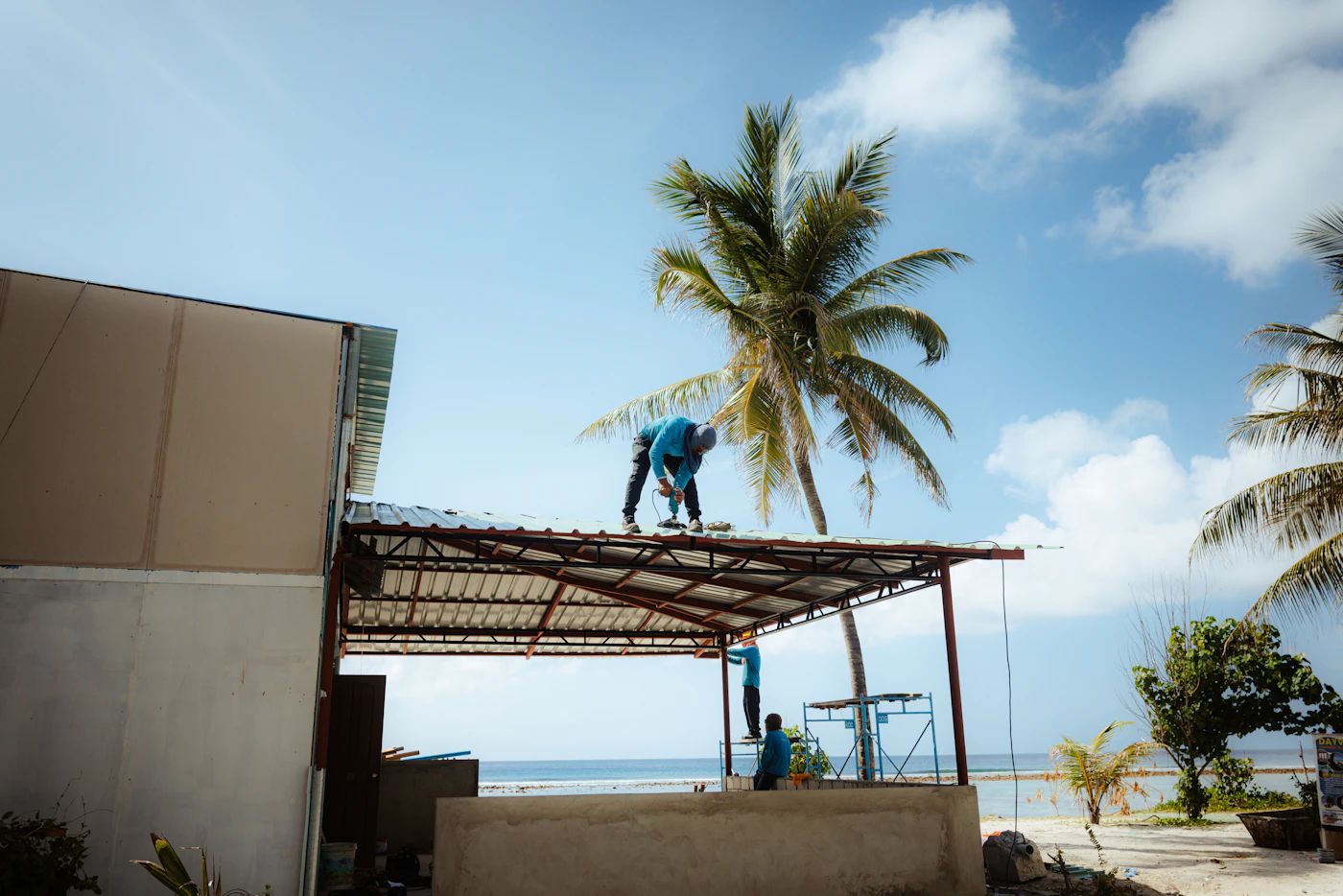
Work on the water needs different paper.
Liability for contractors who build and repair docks, piers and seawalls, work in marinas, or service boats, where a standard contractor policy often falls short.
By Sam Alishahi · CA Insurance License #4348151 · Reviewed November 2026 · How this page is researched
Standard contractor policies often exclude it
Many contractor liability policies exclude work over water, on docks or on vessels. Marine contractors general liability is written for that exposure, and marinas and port authorities often require it with specific limits and additional insureds.
Workers on or near navigable water can fall under federal longshore (USL&H) rules instead of state workers' comp, which changes the coverage you need. I review your operations and place liability, equipment and workers' comp with markets that write marine trades.
- Marine contractors GLInjuries and damage from your work at docks, marinas and on the water.
- EquipmentTools, barges and work boats, subject to policy terms.
- USL&H reviewFederal longshore coverage when your work requires it.
- Contract requirementsLimits and additional insureds for marinas and ports.
What underwriters will ask
Having these ready means I can go to market on the first call. The quote form asks for the same things, and anything you don’t know yet can wait.
- Work: what you build, repair or service, and where.
- Water exposure: share of work over water or on vessels.
- Revenue and payroll: annual revenue, payroll and subcontractors.
- Equipment: barges, work boats and major tools.
- Contracts: marina or port insurance requirements.
- History: current policies and claims.
Who the federal longshore act actually reaches
The Longshore and Harbor Workers' Compensation Act has two tests, and an injured worker has to meet both. The first is where the injury happens: on the navigable waters of the United States, including any adjoining pier, wharf, dry dock, terminal, building way, marine railway or other adjoining area an employer customarily uses to load, unload, repair, dismantle or build a vessel (33 U.S.C. 903(a)). The second is what the person does: maritime employment, which the Act says includes harbor workers such as ship repairmen, shipbuilders and ship-breakers (33 U.S.C. 902(3)).
Several of the exclusions in 902(3) matter for marine contractors:
- People employed by a marina who are not engaged in construction, replacement or expansion of the marina are excluded, and routine maintenance does not count as that work.
- People employed to build a recreational vessel under 65 feet, or to repair any recreational vessel, are excluded.
- People employed exclusively for office clerical, secretarial, security or data processing work are excluded.
- The master or a member of the crew of any vessel is excluded (see the next section).
The marina, recreational-vessel and office exclusions apply only if those workers are covered by a state workers' compensation law. So a crew driving piles for a marina expansion and a mechanic repairing pleasure boats in the same slips can land on different sides of the line. When I set up a file, I ask what share of payroll is on or beside the water and what the work is, so the state workers' comp policy and any federal longshore endorsement line up with how your people actually spend their days.
If the longshore act applies, what you owe
The Act puts the duty on the employer: every employer shall secure the payment of compensation to its employees (33 U.S.C. 904(a)). The Department of Labor says you do that one of two ways: get longshore insurance from an authorized carrier, or get the Office of Workers' Compensation Programs' authorization to self-insure. DOL publishes the list of carriers and self-insured employers currently authorized to write the coverage, so a carrier's name can be checked against it.
DOL's employer page also lists the paperwork:
- Post an up-to-date Form LS-241 (insured) or LS-242 (self-insured) wherever you do business.
- File Form LS-202, the Employer's First Report of Injury, with OWCP within 10 days of learning of an injury that causes lost time of one or more shifts.
- Authorize medical care with Form LS-1 when the injured worker requests it.
- Promptly notify your carrier of all work-related injuries.
DOL warns that failing to secure longshore insurance may lead to criminal and civil liability. The Act adds two more consequences. Under 33 U.S.C. 905(a), if an employer fails to secure compensation, the injured employee may elect to claim compensation or to sue for damages, and the employer may not defend on a fellow servant's negligence, assumption of risk or the employee's contributory negligence. Under 904(a), if a subcontractor fails to secure compensation, the contractor becomes liable for and must secure it. That is why I ask subs for their certificates, and why contractors on waterfront jobs ask you for yours.
Marine contractor insurance, answered
Does my contractor liability policy cover dock work?
Often not. Many contractor policies exclude work over water or on vessels. Marine contractors liability is written for it.
What is USL&H?
The federal Longshore and Harbor Workers' Compensation Act covers certain workers injured on or near navigable water. State workers' comp may not respond, so it's reviewed for marine work.
Do boat detailers and mobile mechanics need this?
If you work on customers' boats at marinas, most marinas require liability naming them as additional insured, and a marine policy is usually the fit.
What do underwriters rate on?
Your operations, how much work is over water, revenue, payroll, equipment and claims history.
What is the difference between the Jones Act and USL&H?
The longshore act (USL&H) covers people in maritime employment, such as harbor workers and ship repairmen, injured on navigable waters or adjoining areas, and it excludes a vessel's master and crew (33 U.S.C. 902(3), 903(a)). Seamen can sue their employer with a jury trial under the Jones Act, 46 U.S.C. 30104. In Chandris v. Latsis (1995), the Supreme Court called the two mutually exclusive compensation regimes.
Do you offer marine contractor insurance outside California?
Yes. Clients across the country send the same quote form. Sam Alishahi is licensed in all 50 states and Washington, DC and places policies there directly. The shopping across carriers works the same way. Rules, minimums and markets differ by state — see insurance requirements by state.
Official sources
- U.S. DOL OWCP - Longshore and Harbor Workers' Compensation Act text (33 U.S.C. 902-905)
- 46 U.S.C. 30104 - Personal injury to or death of seamen (LII)
- Chandris, Inc. v. Latsis, 515 U.S. 347 (1995) (LII)
- U.S. DOL OWCP - Longshore Employer Page
- U.S. DOL OWCP - Authorized Carriers and Self-Insured Employers
- OSHA 29 CFR 1926.106 - Working over or near water
- 33 CFR 320.2 - Corps authorities: Section 10 and Section 404 (LII)
- 33 CFR 322.3 - Activities requiring Section 10 permits (LII)
- 33 CFR 323.3 - Discharges requiring Section 404 permits (LII)
- California Coastal Commission - Coastal Development Permits
Tell me about your work. I'll shop it.
Your operations, revenue and the marina's requirements are enough to start.
Alishahi Insurance · Saman Alishahi, independent insurance broker, California License #4348151. General information, not a quote or a promise of coverage; coverage depends on underwriting and the terms, conditions and exclusions of the policy actually issued. Some policies may be placed with nonadmitted (surplus lines) insurers, which are not members of the California Insurance Guarantee Association (CIGA).
Tell me how to reach you. I’ll take it from there.
Takes about 30 seconds. Your next step comes by email, and you get an update at every step until your quotes are ready.
(877) 711-4545Answered 24/7 · CA License #4348151
Get a reminder before your renewal.
Tell me when your policy renews and I’ll email you about six weeks before, when it’s worth comparing. One email, no calls.