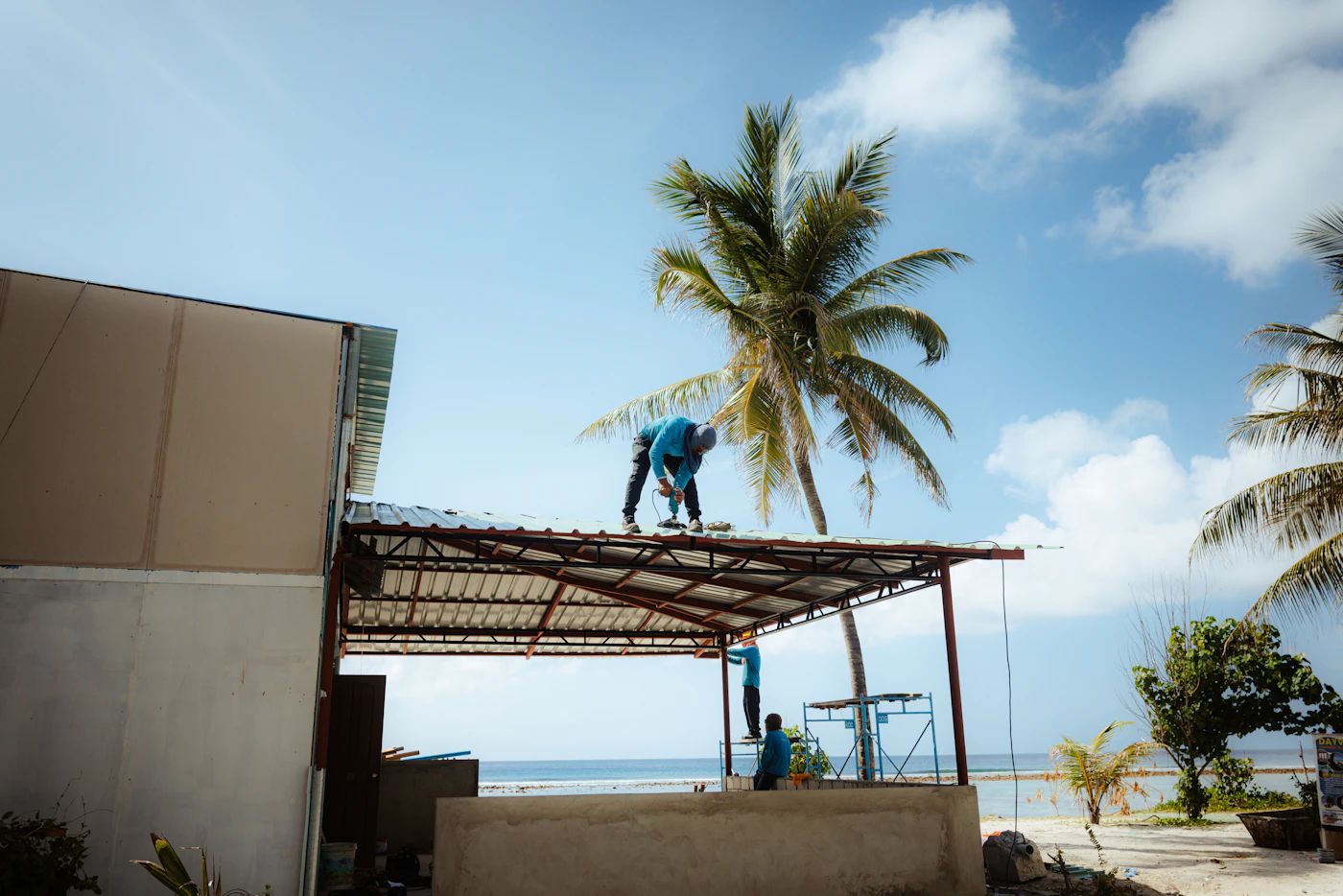
The exclusion in your GL.
Coverage for contractors and property owners when work or a site releases mold, asbestos, lead, fuel or chemicals, claims most general liability policies exclude.
By Sam Alishahi · CA Insurance License #4348151 · Reviewed November 2026 · How this page is researched
General liability excludes pollution
Nearly every general liability policy has a pollution exclusion. If your work disturbs asbestos, spreads mold, spills fuel or releases chemicals, the cleanup and the claims that follow usually aren't covered. Contractors pollution liability (CPL) fills that gap for your operations.
Owners and developers use site pollution coverage for contamination at a property. Public agencies, general contractors and property managers often require CPL in contracts, especially for remediation, demolition, plumbing, HVAC and environmental work. I place it with specialty environmental markets.
- Cleanup costsRemoving pollutants your work released.
- Bodily injury and damageClaims from people or properties affected.
- Mold and asbestosCommon exposures, subject to policy terms.
- Contract requirementsLimits and additional insureds for your contracts.
What underwriters will ask
Having these ready means I can go to market on the first call. The quote form asks for the same things, and anything you don’t know yet can wait.
- Operations: the work you do and any environmental services.
- Revenue: annual revenue and subcontractor costs.
- Jobs: typical job types and largest recent job.
- Contracts: required limits and additional insureds.
- Licenses: CSLB classifications and certifications.
- History: current policies and claims.
Underground tanks have their own proof rule
If you own or operate a petroleum underground storage tank, 40 CFR 280.93 requires you to show you can pay for a leak before one happens. The assurance has to cover taking corrective action and compensating third parties for bodily injury and property damage from accidental releases.
- Per occurrence: a higher minimum for tanks at petroleum marketing facilities or tanks that handle an average of more than 10,000 gallons of petroleum a month, based on the previous calendar year's throughput, and a lower one for all other owners or operators (40 CFR 280.93(a)).
- Annual aggregate: one minimum for owners or operators of 1 to 100 petroleum tanks and a higher one for 101 or more (40 CFR 280.93(b)).
- Defense costs: the rule says the required amounts exclude legal defense costs (40 CFR 280.93(g)).
Those are legal minimums set by regulation, not insurance prices or a limit any policy is promised to carry, and insurance is not the only way to meet them. In California, EPA approved the State Water Board's UST Cleanup Fund on June 9, 1993, as a mechanism for meeting the federal requirements for petroleum tanks. To use the Fund that way, an owner or operator has to be in compliance with financial responsibility requirements and UST laws, send a Certification of Financial Responsibility to the local regulatory agency, and keep a copy at each listed site. Funds and rules vary by state.
Before I shop tank coverage, I need the tank count and monthly throughput, because those decide which federal tier applies.
Lead paint rules on pre-1978 jobs
Under EPA's Renovation, Repair and Painting (RRP) rule, anyone paid to perform work that disturbs paint in housing and child-occupied facilities built before 1978 must be certified, and that includes all firms, even sole proprietorships. A firm cannot advertise or perform covered renovation work without firm certification.
- Training: firms must make sure workers are trained either as certified renovators or on the job by a certified renovator. Certified Renovator course providers must be accredited by EPA or an authorized state or tribal program.
- Minor repair exemption: work that disturbs six square feet or less of paint per room inside, or 20 square feet or less on the exterior, is exempt.
- Always covered: window replacement, demolition of painted surfaces and prohibited practices are covered regardless of square footage.
- Lead-safe work practices: covered work has to follow practices that minimize occupants' exposure to lead hazards.
This varies by state: EPA has authorized some states, such as Oregon and Wisconsin, to run their own RRP programs. California is not on EPA's list. When I take an application from a painting contractor or remodeler, I ask for the firm's certification and how much of the work is in pre-1978 housing.
What EPA says about mold cleanup
Mold problems follow water. EPA's guidance is blunt: if you clean up the mold but don't fix the water problem, most likely the mold problem will come back. Points for plumbers, HVAC and restoration firms:
- Dry within 24-48 hours. EPA says it is important to dry water-damaged areas and items in that window to prevent mold growth.
- About 10 square feet. For a moldy area of less than about 10 square feet, EPA says most people can handle the job themselves. If mold covers more than 10 square feet, EPA points to its guide Mold Remediation in Schools and Commercial Buildings.
- Don't run a contaminated HVAC system. EPA says not to run it if you know or suspect it is contaminated with mold, because it could spread mold through the building.
- Hire experience. EPA tells owners to choose a contractor with mold cleanup experience, check references, and look for one who follows ACGIH guidelines or other professional or government guidance.
Keep notes on when you arrived, when drying started and what you told the owner. If your crews work on air systems, see HVAC contractor insurance.
Pollution liability insurance, answered
Does my general liability cover pollution?
Usually not. Most general liability policies exclude pollution, including mold and asbestos in many cases. A contractors pollution policy covers those claims.
Who needs contractors pollution liability?
Contractors whose work could release pollutants: remediation, demolition, plumbing, HVAC, roofing, painting and restoration, among others. Many contracts require it.
What's the difference between CPL and site pollution?
CPL covers your operations wherever you work. Site pollution covers contamination at a specific property you own or manage.
What do underwriters rate on?
The type of work, revenue, job sizes, limits and claims history.
Is a Phase I environmental site assessment enough to avoid Superfund liability?
Not by itself. EPA says buyers must conduct All Appropriate Inquiries before acquiring the property and comply with all continuing obligations afterward to keep the landowner liability protections.
Do you offer pollution liability insurance outside California?
Yes. Clients across the country send the same quote form. Sam Alishahi is licensed in all 50 states and Washington, DC and places policies there directly. The shopping across carriers works the same way. Rules, minimums and markets differ by state — see insurance requirements by state.
Official sources
- 40 CFR 280.93 - Amount and scope of required financial responsibility (LII)
- State Water Board - UST Cleanup Fund financial responsibility
- EPA - Superfund Liability
- EPA - Brownfields All Appropriate Inquiries
- EPA - RRP Program for Contractors
- EPA - Lead Renovation, Repair and Painting Program
- 40 CFR 61.145 - Asbestos NESHAP demolition and renovation (LII)
- CARB - Asbestos NESHAP Program
- South Coast AQMD - Asbestos demolition and removal (Rule 1403)
- EPA - A Brief Guide to Mold, Moisture and Your Home
Tell me about your work. I'll shop it.
Your trade, revenue and contract requirements are enough to start.
Alishahi Insurance · Saman Alishahi, independent insurance broker, California License #4348151. General information, not a quote or a promise of coverage; coverage depends on underwriting and the terms, conditions and exclusions of the policy actually issued. Some policies may be placed with nonadmitted (surplus lines) insurers, which are not members of the California Insurance Guarantee Association (CIGA).
Tell me how to reach you. I’ll take it from there.
Takes about 30 seconds. Your next step comes by email, and you get an update at every step until your quotes are ready.
(877) 711-4545Answered 24/7 · CA License #4348151
Get a reminder before your renewal.
Tell me when your policy renews and I’ll email you about six weeks before, when it’s worth comparing. One email, no calls.