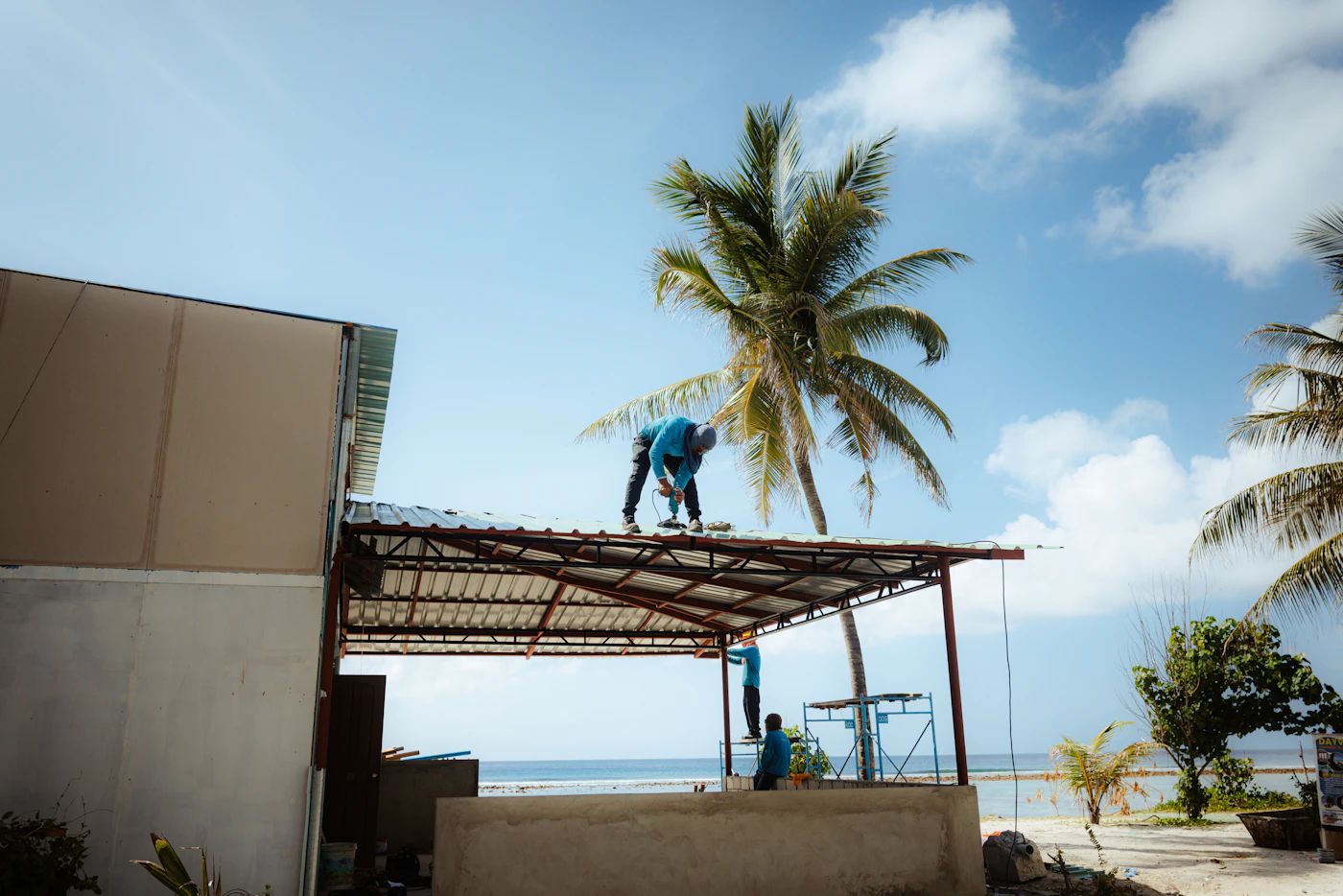
Framing insurance built for new construction.
General liability, workers' compensation, commercial auto and CSLB bonds for framing and rough carpentry contractors on custom homes, tracts and multi-family projects.
By Sam Alishahi · CA Insurance License #4348151 · Reviewed November 2026 · En español · How this page is researched
Framers carry the building for years
Framing sits under everything that comes after it, so when a building has problems years later, the framer is often named. Completed operations coverage, and whether your policy excludes tract homes, condos or multi-family work, matter as much as the price.
Many carriers limit or decline residential new construction in California, so framers are often placed with specialty and surplus lines markets. I read the exclusions, review wrap-up enrollment on larger projects and match the policy to the contracts you sign.
- General liabilityInjuries and property damage, with completed operations for work you've finished.
- Workers' compFalls, lifting and power-tool injuries. Required with employees, and for all licensed contractors from 2028.
- Commercial autoTrucks and trailers that carry crews and lumber.
- License bondThe $25,000 contractor license bond CSLB requires.
What underwriters will ask
Having these ready means I can go to market on the first call. The quote form asks for the same things, and anything you don’t know yet can wait.
- License: CSLB number and classifications.
- Work: custom homes, tracts, multi-family, commercial or remodels, with rough percentages.
- Projects: the largest building and tallest structure you frame.
- Wrap-ups: any OCIP or CCIP projects you're enrolled in.
- Payroll and revenue: employees, subcontractor costs and gross receipts.
- History: current policies and loss runs.
Fall protection rules written for framing crews
Fall exposure is one of the first things a framing account gets asked about, and the rules vary by state. California has a section of its Construction Safety Orders aimed squarely at framers: Title 8, Section 1716.2, which covers framing new buildings with residential-type and light commercial framing methods, defined as joists or trusses resting on stud walls.
- 6 feet is the line: working on top plates, joists, rafters, trusses or beams, building stud walls on a floor before the exterior walls enclose it, and setting starter board, roof sheathing or fascia all call for scaffolding, guardrails, safety nets or personal fall protection once you are 6 feet or more above grade or the floor below.
- Plans are the exception: a fall protection plan is allowed when the employer shows conventional methods are infeasible. Inside the building between 6 and 15 feet, a plan can stand in only if members are securely braced (or laid on their sides on the top plate during installation), spacing is 24 inches on center or less or plywood sheathing covers the gaps, and workers stay more than 6 feet from an open side or edge.
- Walls 15 feet and taller: raised by hand, they need temporary restraints installed first, such as cleats on the foundation or floor system or straps on the bottom plate, to keep the plate from sliding or lifting, and anchor bolts alone can't serve as the bracing.
- Training on paper: exposed employees must be trained under Sections 1509 and 3203, and that training documented.
Under federal OSHA, 29 CFR 1926.501(b)(13) also sets 6 feet for residential construction, requiring guardrails, safety nets or personal fall arrest unless the employer shows those are infeasible or create a greater hazard, in which case it must use a fall protection plan that meets 1926.502(k). Keep your training records and any plan with your safety program, and have them ready when a workers' comp application asks about safety.
The Right to Repair standards that point at framing
California's Right to Repair Act (Civil Code 895 and following) sets standards for original construction intended to be sold as an individual dwelling unit. Several standards in Civil Code 896 land on the framing package:
- Structure: foundations, load-bearing components and slabs must not have significant cracks or significant vertical displacement, and must not make the structure unsafe.
- Earthquake and wind: the home must materially comply with the code's earthquake and wind load resistance criteria in effect when it was built.
- Water through the walls: stucco, siding and exterior walls, including exterior framing, must not let unintended water into the structure or past its moisture barriers, and must not let excessive condensation enter the structure and damage another component.
Civil Code 936 says these standards apply to subcontractors, suppliers and design professionals only to the extent that their negligent act or omission, or breach of contract, caused the violation in whole or in part, and it preserves their common law and contractual defenses. In practice that makes your scope of work, framing inspections and change orders the evidence of what you did and didn't do. Read your subcontract's indemnity wording against the rules on our additional insured page before you sign.
Framing contractor insurance, answered
What is a wrap-up, and do I still need my own policy?
An owner-controlled (OCIP) or contractor-controlled (CCIP) insurance program covers enrolled contractors for work on one project. You still need your own policy for every job outside the wrap-up, and many liability policies exclude wrap-up projects, so the two have to fit together.
Why is completed operations coverage so important for framers?
Problems like water intrusion or structural movement can show up years after a building is finished, and the framer is often named. Completed operations coverage responds to claims from finished work, subject to the policy terms.
Why won't some carriers write tract or condo framing?
Residential new construction in California carries significant construction defect exposure, so many standard carriers exclude tract homes, condos or multi-family work. Specialty markets write it with their own conditions.
Do framers need workers' comp with no employees?
Not today, unless you have employees. Under SB 216, as postponed by SB 1455, every licensed contractor must carry workers' comp starting January 1, 2028.
Does my liability policy cover the building during construction?
No. Damage to the structure while it's being built is usually covered by a builder's risk policy, typically bought by the owner or general contractor.
Does OSHA require fall protection at 6 feet for residential framing?
Yes. Federal rule 29 CFR 1926.501(b)(13) requires guardrails, safety nets or personal fall arrest at 6 feet or more in residential construction unless the employer shows they are infeasible or create a greater hazard, in which case a fall protection plan meeting 1926.502(k) is required. In California, Title 8 Section 1716.2 sets 6-foot triggers for residential-type framing work.
Do you offer framing contractor insurance outside California?
Yes. Clients across the country send the same quote form. Sam Alishahi is licensed in all 50 states and Washington, DC and places policies there directly. The shopping across carriers works the same way. Rules, minimums and markets differ by state — see insurance requirements by state.
Official sources
- Cal/OSHA Title 8 §1716.2 Residential-type Framing Activities
- OSHA 29 CFR 1926.501 Duty to have fall protection
- California Code of Civil Procedure 337.15 (latent deficiencies)
- California Civil Code 941 (time limit for actions)
- California Civil Code 896 (construction standards)
- California Civil Code 936 (subcontractors and suppliers)
- California Civil Code 910 (prelitigation notice)
- California Civil Code 913 (builder acknowledgment)
- California Civil Code 916 (builder inspection)
- California Civil Code 917 (offer to repair)
Send your license number. I'll shop it.
Your CSLB number, project mix, payroll and revenue are enough to start.
Alishahi Insurance · Saman Alishahi, independent insurance broker, California License #4348151. General information, not a quote or a promise of coverage; coverage depends on underwriting and the terms, conditions and exclusions of the policy actually issued. Some policies may be placed with nonadmitted (surplus lines) insurers, which are not members of the California Insurance Guarantee Association (CIGA).
Tell me how to reach you. I’ll take it from there.
Takes about 30 seconds. Your next step comes by email, and you get an update at every step until your quotes are ready.
(877) 711-4545Answered 24/7 · CA License #4348151
Get a reminder before your renewal.
Tell me when your policy renews and I’ll email you about six weeks before, when it’s worth comparing. One email, no calls.