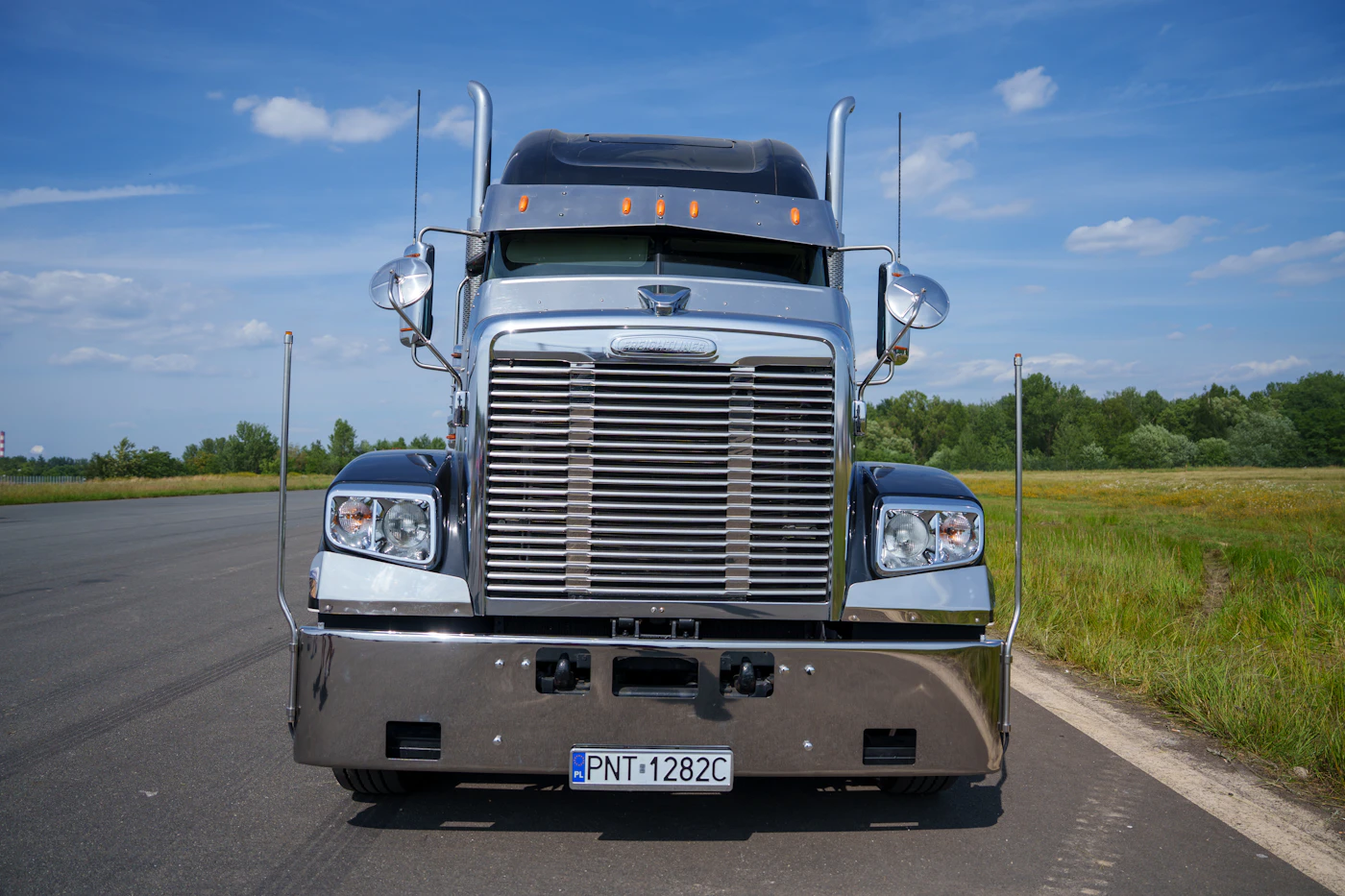
Keep the cold chain and the coverage intact.
Product liability, recall, spoilage, cargo, commercial auto and workers' comp for meat, seafood, poultry, produce and dry goods distributors.
By Sam Alishahi · CA Insurance License #4348151 · Reviewed November 2026 · How this page is researched
Perishable products, long supply chains
Food distributors are named in product claims even when they didn't make the product, and a refrigeration failure can spoil a warehouse or truckload. Imported products add exposure.
I place distributors with markets that write food distribution, combining product liability with spoilage, cargo, auto and property.
- Product liabilityClaims from products you distribute.
- SpoilageRefrigeration failures.
- CargoProducts in your trucks.
- Commercial autoRefrigerated trucks and vans.
What underwriters will ask
Having these ready means I can go to market on the first call. The quote form asks for the same things, and anything you don’t know yet can wait.
- Products: types and suppliers.
- Imports: whether you import products.
- Fleet: refrigerated trucks and values.
- Inventory: typical inventory value.
- Revenue and payroll: annual figures.
- History: claims or recalls.
The FDA traceability rule, lot by lot
FDA's Food Traceability Rule (21 CFR Part 1, Subpart S) implements Section 204(d) of the FDA Food Safety Modernization Act. It covers persons who manufacture, process, pack, or hold foods on FDA's Food Traceability List, and foods that contain a listed food as an ingredient when that ingredient stays in the form shown on the list. Start by checking your product list against the Food Traceability List.
The rule ties records to Critical Tracking Events. Of the seven it names, shipping and receiving are the core of a distributor's records:
- Receiving. For each traceability lot you receive, keep the traceability lot code, quantity and unit of measure, product description, the immediate previous source (other than a transporter), where you received it, the date, the lot code source, and the reference document type and number (21 CFR 1.1345).
- Shipping. For each lot you ship, keep the matching records for the immediate subsequent recipient (other than a transporter) and your ship-from location, and give the first seven items to that recipient in electronic, paper, or other written form (21 CFR 1.1340). FDA counts a move between two of your own locations at different street addresses as shipping and receiving.
- Traceability plan. A written plan describing how you maintain the records (format and location), how you identify listed foods, and how you assign lot codes if applicable, with a point of contact.
Under 21 CFR 1.1455, records go to FDA within 24 hours of a request (or a reasonable time FDA agrees to). When the request is to help during an outbreak, recall, or other threat to public health, you provide an electronic sortable spreadsheet unless a size-based exemption applies. Records are kept for 2 years. Another entity can keep them, but producing them on time stays your job.
On timing, FDA's page says the original compliance date was January 20, 2026, that FDA proposed extending it by 30 months to July 20, 2028, and that Congress directed FDA not to enforce the rule before that same date. FDA says it intends to comply with that directive.
When a supplier recalls, you're a consignee
FDA's recall provisions in 21 CFR Part 7 sit in a subpart titled "Guidance on Policy, Procedures, and Industry Responsibilities" and say what firms should do. Part 7 defines a consignee as anyone who received, purchased, or used the product being recalled, so a distributor that bought a recalled lot is one. Section 7.49 says consignees that receive a recall communication should immediately carry out the recalling firm's instructions and, where necessary, extend the recall to their own consignees.
FDA assigns each recall a class to show the relative degree of health hazard:
- Class I: a reasonable probability that use of, or exposure to, the product will cause serious adverse health consequences or death.
- Class II: the product may cause temporary or medically reversible adverse health consequences, or the probability of serious adverse health consequences is remote.
- Class III: the product is not likely to cause adverse health consequences.
A market withdrawal is different. It involves a minor violation FDA would not take legal action on, or no violation at all, such as normal stock rotation.
When you pass a recall down the line, section 7.49 says the communication should be brief and to the point, identify the product, size, lot numbers, codes, or serial numbers, explain the reason and any hazard, give specific instructions, and give recipients a ready way to report back. Underwriters ask about recall history, so a written recall procedure and a log of past recalls belong in your product liability submission.
California registration for holding food
California adds its own requirement. Health and Safety Code 110460 says no person shall engage in the manufacture, packing, or holding of any processed food in the state unless the person has a valid registration from the department. The registration is valid for one calendar year from the date of issue unless revoked, and the statute says it is not transferable.
The statute's exceptions are specific:
- Persons engaged exclusively in storing, handling, or processing dried beans.
- Cottage food operations registered or permitted under Section 114365.
- Microenterprise home kitchens as defined in Section 113825.
None of those exceptions is written for a general food warehouse. If you hold processed food in California, confirm your registration status with the state before assuming you're exempt. Outside California, requirements vary by state.
When I quote a California distributor, I ask for the state registration along with your FDA food facility registration.
Food distributor insurance, answered
Am I liable for products I didn't make?
Distributors are often named in claims. Vendor agreements and supplier certificates help.
Is spoilage in a truck covered?
With cargo coverage that includes refrigeration breakdown, often yes.
Do importers need more coverage?
Imported products can leave you as the first U.S. party in a claim, so product limits matter.
Is a recall covered?
Recall is a separate coverage from product liability.
Do you offer food distributor insurance outside California?
Yes. Clients across the country send the same quote form. Sam Alishahi is licensed in all 50 states and Washington, DC and places policies there directly. The shopping across carriers works the same way. Rules, minimums and markets differ by state — see insurance requirements by state.
Official sources
- FDA: FSMA Final Rule on Requirements for Additional Traceability Records for Certain Foods
- 21 CFR 1.1340 (shipping KDEs), Cornell LII
- 21 CFR 1.1345 (receiving KDEs), Cornell LII
- 21 CFR 1.1455 (records, 24-hour request, retention), Cornell LII
- 21 U.S.C. 350f, Reportable Food Registry, Cornell LII
- 21 CFR 7.3, recall definitions, Cornell LII
- 21 CFR 7.49, recall communications, Cornell LII
- 21 CFR 1.500, FSVP definitions, Cornell LII
- 21 CFR 1.502, FSVP requirement, Cornell LII
- California Health and Safety Code 110460, california.public.law
Send your product mix. I'll shop it.
Products, fleet and sales are enough to start.
Alishahi Insurance · Saman Alishahi, independent insurance broker, California License #4348151. General information, not a quote or a promise of coverage; coverage depends on underwriting and the terms, conditions and exclusions of the policy actually issued. Some policies may be placed with nonadmitted (surplus lines) insurers, which are not members of the California Insurance Guarantee Association (CIGA).
Tell me how to reach you. I’ll take it from there.
Takes about 30 seconds. Your next step comes by email, and you get an update at every step until your quotes are ready.
(877) 711-4545Answered 24/7 · CA License #4348151
Get a reminder before your renewal.
Tell me when your policy renews and I’ll email you about six weeks before, when it’s worth comparing. One email, no calls.