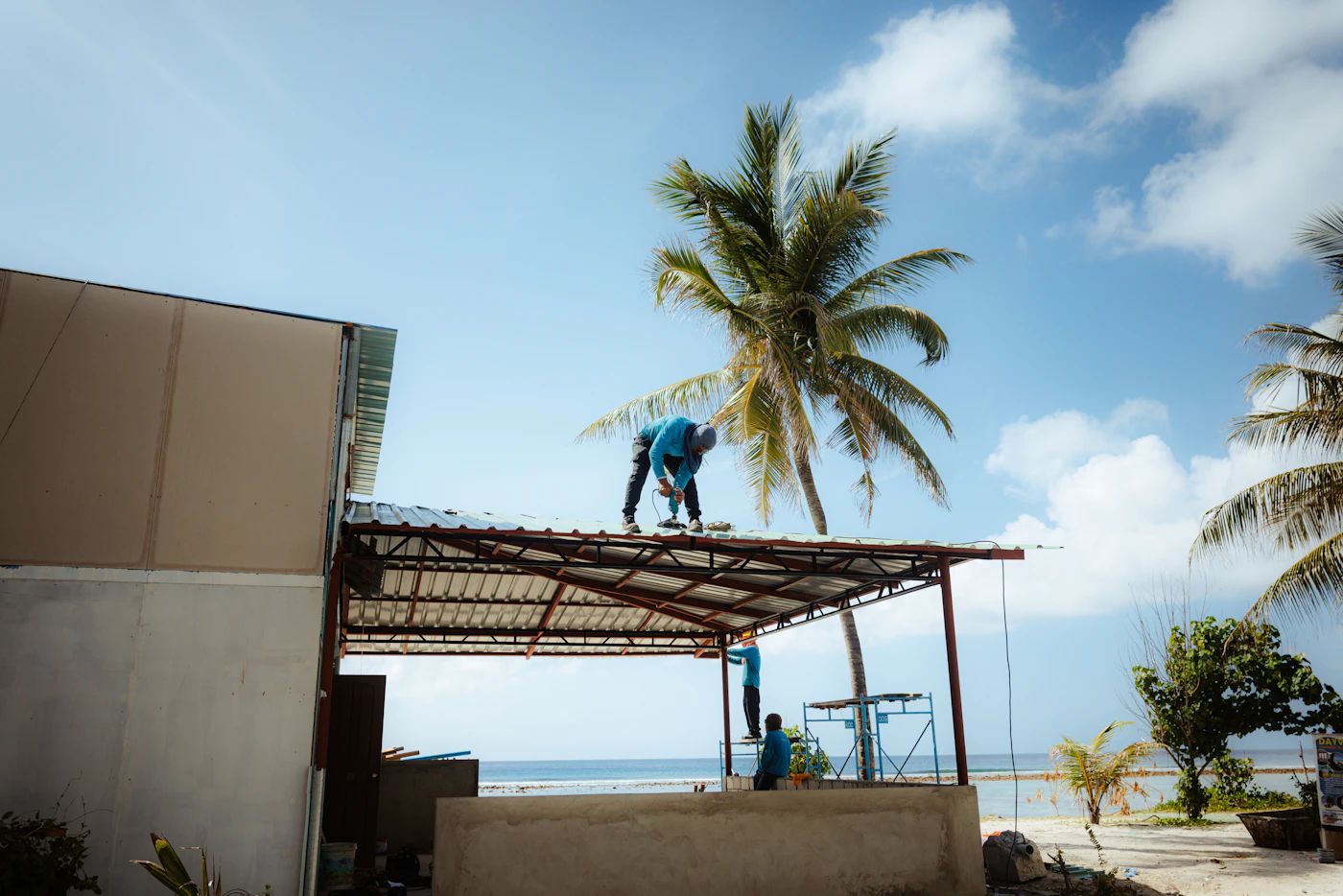
Flooring insurance from subfloor to finish.
General liability, workers' compensation, tools, commercial auto and CSLB bonds for hardwood, carpet, vinyl and LVP installers and floor refinishers.
By Sam Alishahi · CA Insurance License #4348151 · Reviewed November 2026 · En español · How this page is researched
What flooring work puts at risk
Flooring crews work inside finished homes and buildings. A scratched cabinet, a stain-soaked rag that catches fire, a refinishing job that leaves dust through the house or a floor that buckles after install can all turn into a claim against you.
Workers' comp is required as soon as you have employees, and California's 2028 law will require it for all licensed contractors. I place flooring contractors with carriers that write the trade and rate the work you actually do, whether that's carpet, hardwood, resilient flooring or sanding and refinishing.
- General liabilityDamage to customers' homes and injuries to others, including completed work.
- Workers' compRequired with employees, and for all licensed contractors from 2028.
- Tools and equipmentSanders, saws, nailers and stretchers, on the job and in the van.
- License bondThe $25,000 contractor license bond CSLB requires.
What underwriters will ask
Having these ready means I can go to market on the first call. The quote form asks for the same things, and anything you don’t know yet can wait.
- License: CSLB number and classifications.
- Work: hardwood, carpet, vinyl, LVP or refinishing, with rough percentages.
- Jobs: residential, commercial, new construction or remodel.
- Payroll: employees, payroll and subcontractor costs.
- Revenue: annual gross receipts.
- History: current policies and loss runs.
Grinding slab and cutting tile: the silica rule
Grinding slab and cutting tile or stone put respirable crystalline silica in the air. Federal OSHA's construction standard, 29 CFR 1926.1153, sets an action level of 25 µg/m³ and a permissible exposure limit of 50 µg/m³, both as 8-hour time-weighted averages. For a task listed on Table 1 of the standard, an employer that fully and properly implements the controls the table specifies does not have to measure exposures for that task. The entries flooring crews use most:
- Walk-behind milling machines and floor grinders: water fed continuously to the cutting surface, or the manufacturer's recommended dust collector with its recommended airflow, a 99 percent filter and a filter-cleaning mechanism. Indoors or enclosed, a HEPA-filtered vacuum removes loose dust between passes. No respirator is listed.
- Handheld grinders (other than mortar removal): water delivery outdoors only, or a shroud and dust collector providing at least 25 cfm of airflow per inch of wheel diameter, with a 99 percent filter and a cyclonic pre-separator or filter-cleaning mechanism. Indoors, an APF 10 respirator is required once the task runs more than four hours in a shift.
- Handheld power saws (any blade diameter): water fed continuously to the blade. Indoors or in an enclosed area, an APF 10 respirator at any duration; outdoors, APF 10 above four hours.
- Stationary masonry saws: water fed continuously to the blade; no respirator listed.
If Table 1 tasks combined run over four hours in a shift, the over-four-hours respirator column applies to each. The employer needs a written exposure control plan describing the silica tasks, the controls for each, housekeeping, and how access to work areas is restricted. It is reviewed at least annually and made available to employees on request. A designated competent person frequently inspects job sites, materials and equipment. Dry sweeping and compressed-air cleanup are barred where they could add to exposure, with narrow exceptions.
Tearing out pre-1981 vinyl and asphalt flooring
Cal/OSHA's construction asbestos standard, Title 8 section 1529, treats removal of asbestos-containing floor tile and sheeting as Class II work. Asphalt and vinyl flooring installed no later than 1980 must be considered asbestos-containing unless the employer determines otherwise under the standard. Resilient flooring, including its mastic and backing, is assumed to contain asbestos unless an industrial hygienist determines it is asbestos-free using recognized analytical techniques. Before work begins, building owners must determine the presence, location and quantity of asbestos material, and employers must identify it.
For vinyl and asphalt flooring that contains asbestos, or that is in a building constructed no later than 1980 and hasn't been verified asbestos-free, section 1529 requires trained employees and these practices:
- No sanding of the flooring or its backing.
- Floors cleaned with a vacuum that has a HEPA filter, a disposable dust bag and a metal floor tool with no brush; no dry sweeping.
- Resilient sheeting cut with a wetted snip point and kept wet during delamination; rip-up is prohibited.
- Residual adhesive and backing scraped wet.
- No mechanical chipping unless it is done inside a negative pressure enclosure.
- Tiles removed intact unless the employer shows that isn't possible.
Labor Code 6501.5 requires an employer or contractor doing asbestos-related work on 100 square feet or more of asbestos-containing material to register with the Division of Occupational Safety and Health, give written notice of each job, post a "Danger—Asbestos" warning readable at 20 feet, and give a copy of the registration to the prime contractor or other employers on the site before the job starts. Business and Professions Code 7058.5 adds that at that size the contractor must hold the C-22 Asbestos Abatement classification or have a qualifier who passed the asbestos certification exam. The exam exemption for vinyl asbestos floor materials lists installation, maintenance and repair; removal is not on that list. How asbestos fits with contractors pollution coverage is on my pollution liability insurance page.
Flooring contractor insurance, answered
Which CSLB license covers flooring?
Hardwood, carpet, vinyl and other floor coverings generally fall under C-15 Flooring and Floor Covering. Ceramic and mosaic tile is a separate classification, C-54. A license is generally required for jobs of $1,000 or more in labor and materials combined.
Does general liability cover a floor that buckles or fails?
Liability can cover damage your work causes to other property, such as baseboards, cabinets or a ceiling below. It typically doesn't pay to tear out and redo the floor itself.
Do flooring contractors need workers' comp with no employees?
Not today, unless you have employees. Under SB 216, as postponed by SB 1455, every licensed contractor must carry workers' comp starting January 1, 2028.
Are my sanders and tools covered in the van?
Only with tools and equipment coverage. Commercial auto covers the vehicle, not the equipment inside it.
What if I remove old flooring that turns out to contain asbestos?
Most liability policies exclude asbestos, and abatement is regulated work. If you run into suspect material, stop and have it tested before going further.
Is porcelain tile engineered stone under Cal/OSHA's silica rule?
No. Section 5204 says fired ceramic and porcelain tiles and panels are not artificial stone, though its trigger-task rules also reach materials over 10 percent crystalline silica. Cutting or grinding tile during construction work falls under section 1532.3 unless exposure will remain below 25 µg/m³ under any foreseeable conditions.
Do you offer flooring contractor insurance outside California?
Yes. Clients across the country send the same quote form. Sam Alishahi is licensed in all 50 states and Washington, DC and places policies there directly. The shopping across carriers works the same way. Rules, minimums and markets differ by state — see insurance requirements by state.
Official sources
- 29 CFR 1926.1153, Respirable crystalline silica (construction), Cornell LII
- Cal/OSHA Title 8 section 1532.3, Occupational Exposures to Respirable Crystalline Silica (construction)
- Cal/OSHA Title 8 section 5204, Occupational Exposures to Respirable Crystalline Silica (general industry)
- Cal/OSHA Respirable Crystalline Silica Standards and Resources
- Cal/OSHA Title 8 section 1529, Asbestos (construction)
- California Labor Code 6501.5, asbestos-related work registration
- California Business and Professions Code 7058.5, asbestos certification
- EPA: Formaldehyde Emission Standards for Composite Wood Products
- 40 CFR 770.3, Definitions (TSCA Title VI), Cornell LII
- 40 CFR 770.45, Labeling (TSCA Title VI), Cornell LII
Send your license number. I'll shop it.
Your CSLB number, payroll and revenue are enough to start.
Alishahi Insurance · Saman Alishahi, independent insurance broker, California License #4348151. General information, not a quote or a promise of coverage; coverage depends on underwriting and the terms, conditions and exclusions of the policy actually issued. Some policies may be placed with nonadmitted (surplus lines) insurers, which are not members of the California Insurance Guarantee Association (CIGA).
Tell me how to reach you. I’ll take it from there.
Takes about 30 seconds. Your next step comes by email, and you get an update at every step until your quotes are ready.
(877) 711-4545Answered 24/7 · CA License #4348151
Get a reminder before your renewal.
Tell me when your policy renews and I’ll email you about six weeks before, when it’s worth comparing. One email, no calls.