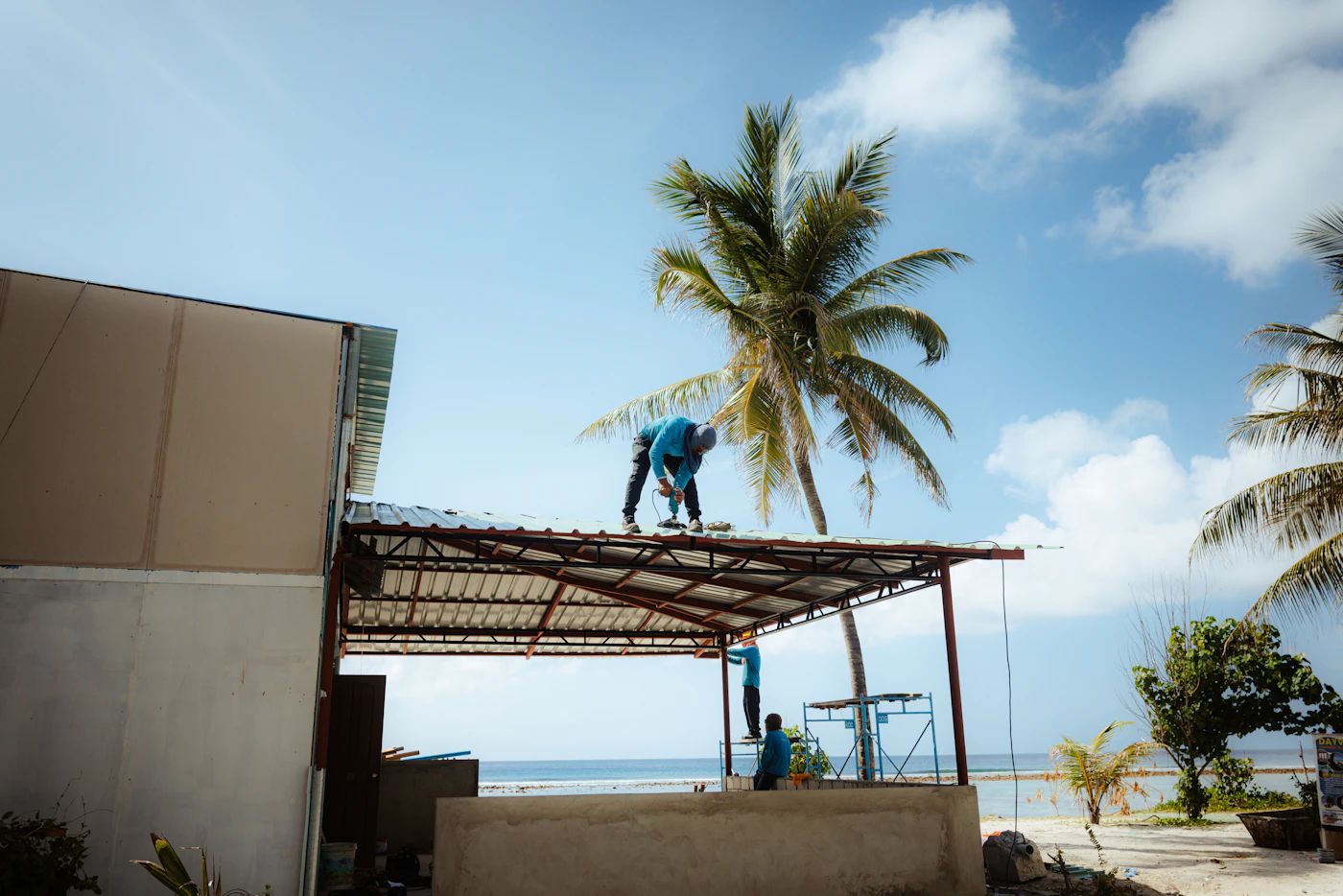
The policy you buy for the owner.
When a contract says you must provide an owners and contractors protective policy, the owner is the named insured and you’re the one who buys it. I place it for the project, at the limits the contract sets.
By Sam Alishahi · CA Insurance License #4348151 · Reviewed November 2026 · How this page is researched
Your premium, their policy
An owners and contractors protective (OCP) policy, written on the ISO CG 00 09 form, is a stand-alone policy that covers the named insured’s liability for bodily injury and property damage caused in whole or in part by an independent contractor’s work. The contractor buys it, for the sole benefit of the owner or general contractor it’s working for. It covers their vicarious liability for your work and their own liability for general supervision of it, at the location shown on the declarations.
Owners ask for OCP because its limits belong to them alone, rather than being shared with everyone else named as an additional insured on your general liability, and because payments under it usually fall outside your own liability program. Public agencies write it into their contracts. Indiana’s Department of Transportation, for one, names the State of Indiana, care of INDOT, as the named insured. I start with your contract’s insurance section, then quote the policy at the limits it lists.
- Named insuredThe owner, general contractor or agency in your contract, not you.
- What it coversTheir liability for your work and for general supervision of it.
- When it endsInjury or damage after the work is completed or put to use is excluded.
- Premium basisUsually a rate per $1,000 of the contract price.
What underwriters will ask
Having these ready means I can go to market on the first call. The quote form asks for the same things, and anything you don’t know yet can wait.
- Contract: the insurance section that calls for the OCP and its limits.
- Named insured: the exact legal name of the owner, contractor or agency.
- Project: address, scope of work, and start and finish dates.
- Contract price: the amount between you and the named insured.
- Your liability policy: current general liability declarations.
- Subcontractors: who else will work under you on the job.
Working near tracks: railroad protective liability
Railroads have their own protective coverage. IRMI defines railroad protective liability as insurance protecting a railroad from liability it incurs because of the work of contractors on or near the railroad right-of-way. As with an OCP, the protected party is not the contractor doing the work: Caltrain's FAQ names the railroads as named insureds and says the permit applicant is not covered.
That Caltrain third-party projects FAQ carries a revision stamp of 12/06/13, so confirm current terms with Caltrain before relying on it. As written, it says:
- When: railroad protective liability insurance is mandatory for any project within 50 feet of active tracks.
- Why: the FAQ says the standard general liability policy excludes liability assumed under contract for construction or demolition within 50 feet of a railroad track, and gives that as the reason it asks for a separate railroad protective policy.
- Who is covered: Caltrain, each of its member agencies, TASI and Union Pacific as named insureds, plus any other railroad on the tracks. The permit applicant is not covered.
- No substitutes: self-insurance or endorsements to your general liability policy are not accepted in place of it.
- Your own policy changes too: the railroad policy's insurer requires deletion of the contractual liability exclusion for demolition or construction within 50 feet of the tracks on your general liability policy.
- Where to buy: one answer allows Caltrain's carrier or your own; another says it shall come from Caltrain's carrier.
Union Pacific's right-of-entry checklist says railroad protective insurance can be obtained from your commercial insurance carrier and, in certain cases, from Union Pacific. General liability, auto liability and workers' compensation are required in all cases. You don't submit insurance with the application; proof goes back with the agreement Union Pacific sends you to sign.
If a job near tracks also calls for an OCP, the two policies protect different named insureds: the owner on the OCP, the railroad on the railroad policy. I read the railroad's requirements and the owner's insurance section side by side and check what your general liability needs to change.
California indemnity limits and the OCP
Owners write indemnity clauses and insurance requirements into the same contract, and in California the indemnity side has limits set by Civil Code section 2782. As the statute reads:
- Sole negligence (a): construction contract provisions that purport to indemnify the promisee against liability for the sole negligence or willful misconduct of the promisee or its agents, servants or independent contractors directly responsible to it, or for defects in design furnished by those persons, are void and unenforceable.
- Public agencies (b): provisions in a public agency's construction contract that purport to impose on the contractor, or relieve the agency from, liability for the agency's active negligence are void and unenforceable. For contracts entered into on or after January 1, 2013, that reaches any contractor, subcontractor or supplier of goods or services.
- Private owners (c): for contracts on or after January 1, 2013, similar provisions are unenforceable to the extent of the owner's active negligence, unless the owner is acting as a contractor or supplier. This does not apply to a homeowner doing a home improvement project on their own single-family dwelling.
- Insurance left alone: subdivision (a) says it does not affect the validity of any insurance contract, workers' compensation, or agreement issued by an admitted insurer.
The OCP itself is narrow. IRMI's commentary says the named insured is covered only for its liability for the acts of the designated contractor, and the owner's own direct acts are excluded except for general supervision. IRMI notes the form does not define "general supervision"; its glossary says courts have usually given the term a broad meaning, while the commentary cites cases that read it narrowly.
IRMI concludes the owner needs a full-blown general liability policy and that the OCP is not designed to substitute for one. When I review a contract, I read the indemnity clause and the insurance section together so your contractor insurance and the OCP line up with what the contract asks. Indemnity rules vary by state.
OCP liability insurance, answered
Who buys an OCP policy, and who is covered?
The contractor buys it, and the owner or general contractor named in the contract is the named insured. The contractor who pays for it gets no coverage from it.
Isn’t being an additional insured on my policy the same thing?
Not quite. Additional insured status shares your limits and can reach your umbrella and completed operations. An OCP gives the owner its own limits, pays first without seeking contribution from the owner’s insurance, and requires advance written notice of cancellation to the owner, but it covers only ongoing work and your umbrella generally won’t sit above it.
Does OCP cover completed operations?
No. It excludes bodily injury and property damage that happens after the work is completed or put to its intended use, with an exception for other contractors still working on the project. Completed operations stay with your own general liability.
Does OCP cover the owner’s own negligence?
Only liability arising from general supervision of your work. The named insured’s other direct negligence is excluded.
How much does OCP cost?
It’s usually rated per $1,000 of the contract price between you and the named insured, and it can run several thousand dollars or more on a larger job. Owners and general contractors typically expect it to be built into your bid.
What is a designated contractor on an OCP policy?
It is the contractor identified in the OCP policy whose work the policy is written around. IRMI says the designated contractor purchases the insurance on behalf of the party it is working for and is not itself an insured under the OCP.
Is railroad protective liability the same as OCP?
No. IRMI defines railroad protective liability as coverage protecting a railroad from liability it incurs because of contractors' work on or near its right-of-way, while IRMI's OCP commentary says only the owner, as named insured, is protected by an OCP.
Does an OCP policy cover completed operations?
IRMI's commentary says the OCP excludes injury that takes place after the earlier of when the operation has been completed or put to its intended use, and that the completed operations coverage available under some additional insured endorsements is not available on the OCP.
Do you offer owners and contractors protective liability outside California?
Yes. Clients across the country send the same quote form. Sam Alishahi is licensed in all 50 states and Washington, DC and places policies there directly. The shopping across carriers works the same way. Rules, minimums and markets differ by state — see insurance requirements by state.
Official sources
- IRMI: Owners and contractors protective (OCP) liability coverage
- IRMI: OCP liability versus additional insured coverage
- Indiana Department of Transportation: Special provision 103-C-036, owner’s and contractor’s protective liability insurance
- IRMI: OCP liability versus additional insured coverage (Stanovich)
- IRMI: Designated contractor
- IRMI: General supervision
- IRMI: Railroad protective liability
- Caltrans: 2025 Standard Specifications (sections 3-1.07, 5-1.20C, 7-1.05, 7-1.06)
- Caltrans Division of Construction: Insurance requirements summary (Aug. 2025 file)
- Caltrain: Third-party projects frequently asked questions (revision stamp 12/06/13)
- Union Pacific Real Estate: Temporary use / right of entry checklist
- California Civil Code section 2782 (california.public.law)
Send me the contract. I’ll quote the OCP.
The contract’s insurance section, the named insured and the contract price are enough to start.
Alishahi Insurance · Saman Alishahi, independent insurance broker, California License #4348151. General information, not a quote or a promise of coverage; coverage depends on underwriting and the terms, conditions and exclusions of the policy actually issued.
Tell me how to reach you. I’ll take it from there.
Takes about 30 seconds. Your next step comes by email, and you get an update at every step until your quotes are ready.
(877) 711-4545Answered 24/7 · CA License #4348151
Get a reminder before your renewal.
Tell me when your policy renews and I’ll email you about six weeks before, when it’s worth comparing. One email, no calls.