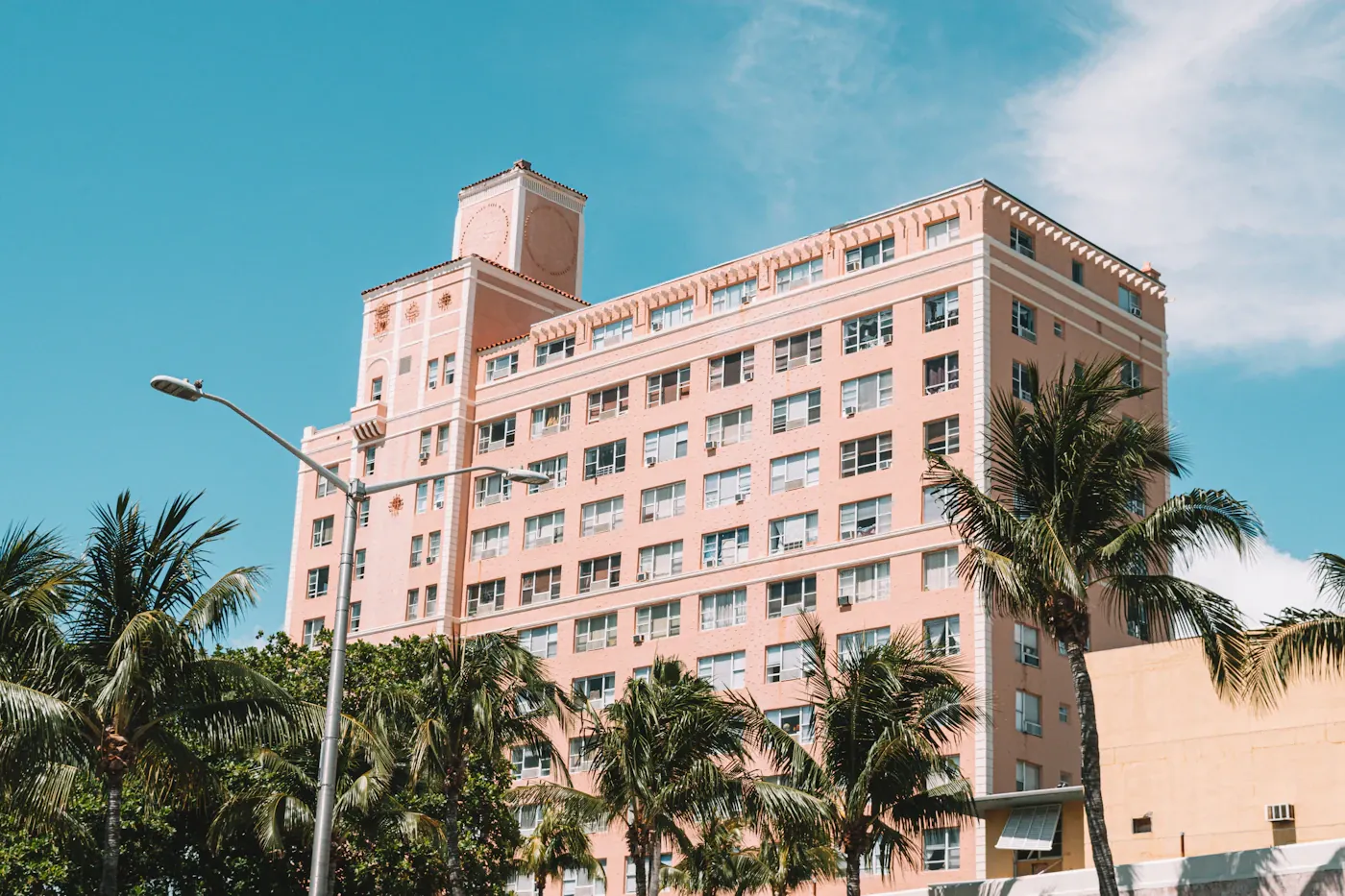
Every room, every guest, covered.
Coverage for independent hotels, motels, inns and boutique properties, whether you own the building, operate it, or both.
By Sam Alishahi · CA Insurance License #4348151 · Reviewed November 2026 · How this page is researched
Hospitality has its own exposures
A hotel or motel combines a building, a business and a steady stream of guests. Claims come from slips and falls, pools, security incidents and guests' property, and a fire or water loss can close rooms for months. Innkeepers liability covers guests' belongings in your care, which a standard policy may not address.
Older buildings, pools, bars and security all shape which carriers will quote. I package hotel and motel property, liability, liquor and workers' comp with carriers that write hospitality.
- Property and incomeBuilding, furnishings and lost room revenue after a covered loss.
- Guest liabilityInjuries on the property, including pools.
- Innkeepers liabilityGuests' property in your care.
- Liquor and workers' compBars and restaurants on site, and your staff.
What underwriters will ask
Having these ready means I can go to market on the first call. The quote form asks for the same things, and anything you don’t know yet can wait.
- Property: address, rooms, year built, construction and updates.
- Protection: sprinklers, alarms and security.
- Amenities: pool, restaurant, bar and events.
- Revenue: annual room and food and beverage revenue.
- Staff: payroll and employees.
- History: current policies and claims.
California's cap on guest property, and the safe notice
Civil Code 1859 makes an innkeeper or hotelkeeper liable as a "depositary for hire," but never more than $1,000 in the aggregate, and no more than:
- $500 for each trunk and its contents.
- $250 for each valise or traveling bag and its contents, $250 for each box, bundle or package and its contents, and $250 for all other personal property.
The per-item limits give way if you agreed in writing with the owner to assume greater liability.
Civil Code 1860 adds the safe rule. If you keep a fireproof safe and tell guests, in person or by a printed notice in a prominent place in the office or the guest's room, that you won't be liable for money, jewelry, documents, furs or other small, unusually valuable items unless they go in the safe, you aren't liable for those items left outside it, except where your own acts contribute to the loss. For that property, liability never exceeds $500 per guest unless you gave a written receipt for it.
I'd post the notice at the desk and in each room. A written receipt for deposited valuables lifts the $500 ceiling.
IRMI describes innkeepers legal liability as insuring the operator's liability as bailee of guests' property as each state's statute imposes it, by endorsement to a commercial crime policy. Other states have their own statutes, so set the limit against the law where the hotel sits.
Los Angeles: panic buttons and room quotas
The City of Los Angeles Hotel Worker Protection Ordinance (LAMC Chapter XVIII, Article 2, Section 182.00 and following) took effect August 12, 2022. It covers hotels, motels, motor lodges and extended-stay hotels renting for fewer than 30 days. Licensed bed and breakfasts in a single-unit residence and short-term rentals are out. What it requires:
- Personal security devices. Every worker assigned to a guest room or restroom where no other worker is assigned gets one at no cost, kept in working order. It must signal the worker's location and connect directly to a responder. A whistle or alarm bell doesn't count.
- A responder at all times. A designated security guard. Hotels with fewer than 60 guest rooms may use a manager or supervisor instead, with at least three hours of training a year.
- Door signs and training. A sign of at least 18-point type on the back of each guest room and restroom entrance door, and annual worker training. At 60 or more rooms, training goes in each language that is the primary language of at least 10% of the staff.
- Workload caps. At 45 to 59 rooms, a room attendant can't be required to clean more than 4,000 square feet in an eight-hour workday, and at 60 or more rooms, 3,500, unless paid twice the regular rate for every hour that day. It drops 500 square feet for each special-attention or extra-bed room over five, each extra building, and each floor beyond two. Hotels under 45 rooms are exempt from the caps.
- Overtime. No more than 10 hours in a workday without the worker's written consent, except in an emergency.
The City or any aggrieved worker can sue for actual damages plus $100 per worker per day, tripled for willful violations. Hotels in unincorporated Los Angeles County answer to a separate County ordinance with its own room thresholds, operative April 1, 2026.
Hotel & motel insurance, answered
What is innkeepers liability?
Coverage for guests' property in your care, such as luggage or valuables. It's often a separate coverage part for hotels and motels.
Does a hotel policy cover lost room revenue?
Business income coverage can pay lost revenue while rooms are closed after a covered loss.
Are pools a problem for insurance?
Pools add liability and some carriers restrict them, but hotels with pools are insurable with the right safety measures.
What do underwriters rate on?
Rooms, location, building age and protection, amenities, revenue and claims history.
Do bed and breakfasts in California have to do human trafficking training?
No. Government Code 12950.3's training rule applies to hotels and motels and excludes bed and breakfast inns. The Civil Code 52.6 posting rule does include bed and breakfast inns, though not personal residences.
Does the Los Angeles panic button rule apply to small motels?
Yes, inside the City of Los Angeles. The device rule in LAMC 182.02 has no room minimum, though a hotel under 60 guest rooms may use a trained manager or supervisor as the responder, and the square-footage caps start at 45 rooms.
Do you offer hotel and motel insurance outside California?
Yes. Clients across the country send the same quote form. Sam Alishahi is licensed in all 50 states and Washington, DC and places policies there directly. The shopping across carriers works the same way. Rules, minimums and markets differ by state — see insurance requirements by state.
Official sources
- Cal. Civil Code 1859 (innkeeper liability limits), california.public.law
- Cal. Civil Code 1860 (fireproof safe notice), california.public.law
- Cal. Government Code 12950.3 (hotel/motel human trafficking training), california.public.law
- California Legislative Information: SB 970 (2018), Chapter 842, chaptered bill text
- Cal. Civil Code 52.6 (human trafficking notice posting), california.public.law
- City of Los Angeles Ordinance No. 187565, Hotel Worker Protection Ordinance (City Clerk)
- Los Angeles County DCBA: Hotel Worker Protection Ordinance (unincorporated areas)
- IRMI glossary: innkeepers legal liability
- IRMI: CGL Insurance 2007 Edition, A Summary of Changes (CG 21 46, CG 21 97)
- IRMI: Breaking Coverage Case, CGL Insurers Owe Coverage for Sex Trafficking Suits (Dec. 6, 2024)
Tell me about your property. I'll shop it.
The address, room count and amenities are enough to start.
Alishahi Insurance · Saman Alishahi, independent insurance broker, California License #4348151. General information, not a quote or a promise of coverage; coverage depends on underwriting and the terms, conditions and exclusions of the policy actually issued. Some policies may be placed with nonadmitted (surplus lines) insurers, which are not members of the California Insurance Guarantee Association (CIGA).
Tell me how to reach you. I’ll take it from there.
Takes about 30 seconds. Your next step comes by email, and you get an update at every step until your quotes are ready.
(877) 711-4545Answered 24/7 · CA License #4348151
Get a reminder before your renewal.
Tell me when your policy renews and I’ll email you about six weeks before, when it’s worth comparing. One email, no calls.