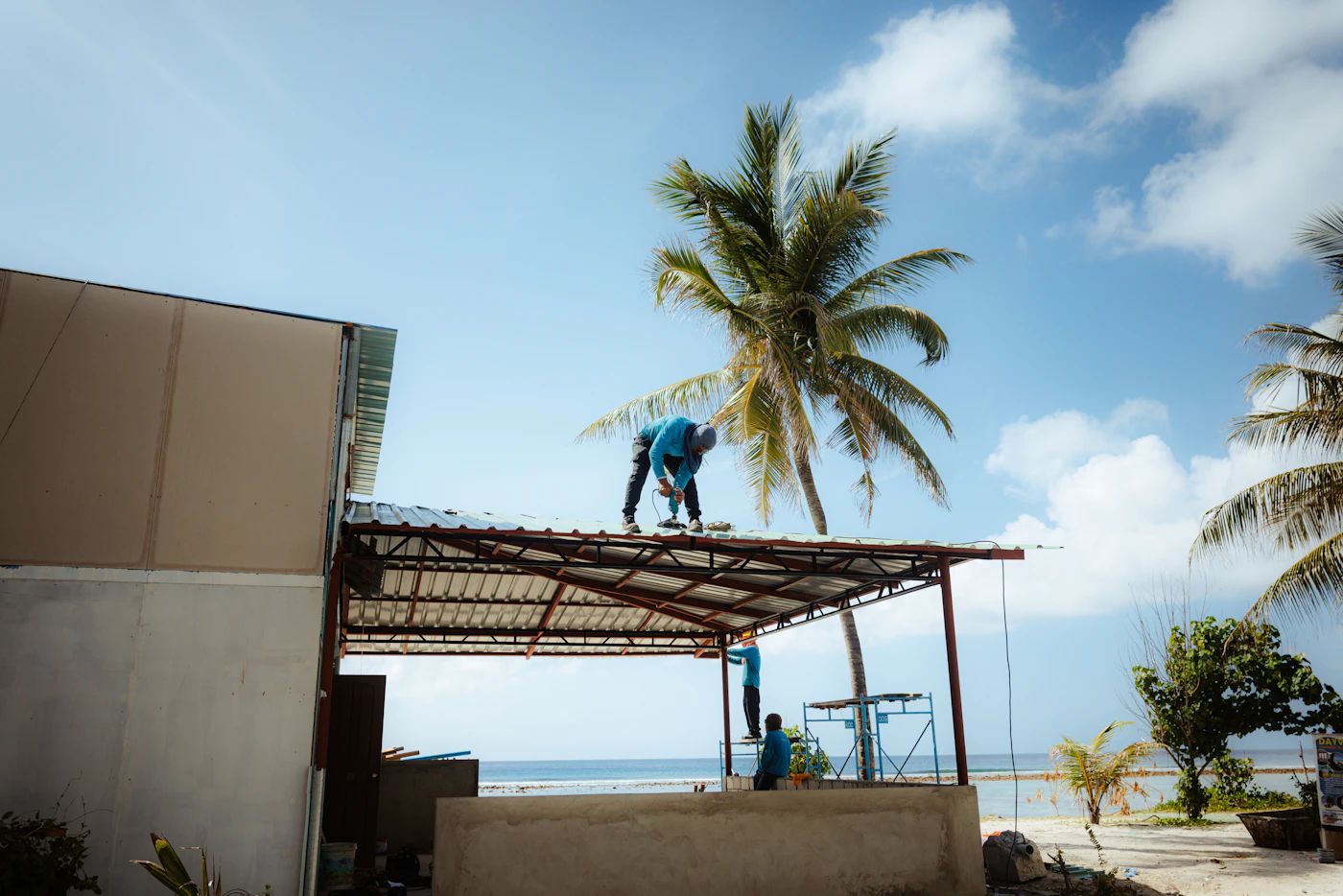
HVAC insurance that keeps the license active.
Workers' compensation, general liability, tools, commercial auto and CSLB bonds for heating, ventilation and air-conditioning contractors.
By Sam Alishahi · CA Insurance License #4348151 · Reviewed November 2026 · En español · How this page is researched
C-20 licensees must carry workers' comp
California requires C-20 HVAC licensees to carry workers' compensation whether or not they have employees. Without it, CSLB suspends the license, or, on some licenses that also hold other classifications, removes the C-20 classification (Business and Professions Code 7125(g)).
HVAC work also brings liability exposures: fire from brazing, water damage from condensate lines, and carbon monoxide from furnace work. I place HVAC contractors with carriers that write the trade and keep the certificates coming.
- Workers' compRequired for every C-20 license.
- General liabilityDamage to customers' property and injuries.
- Tools and equipmentGauges, recovery machines and inventory.
- Commercial autoService vans and trucks.
What underwriters will ask
Having these ready means I can go to market on the first call. The quote form asks for the same things, and anything you don’t know yet can wait.
- License: CSLB number and classifications.
- Work: residential, commercial, service or new installs.
- Payroll: employees, payroll and subcontractor costs.
- Vehicles: service vans and trucks.
- Revenue: annual gross receipts.
- History: current policies and loss runs.
EPA Section 608: who must be certified and what to record
Under 40 CFR 82.161, anyone who could reasonably be expected to open the refrigerant circuit while maintaining, servicing, repairing or disposing of equipment must pass an exam from an EPA-approved certification program. That covers ozone-depleting refrigerants and every substitute not on the short exempt list in 82.154(a)(1), which includes carbon dioxide, nitrogen, water and, in certain equipment only, ammonia and some hydrocarbons. The certification type has to match the equipment:
- Type I. Small appliances, meaning factory-sealed units with 5 pounds or less of refrigerant, such as window air conditioners.
- Type II. Medium-, high- and very high-pressure appliances other than small appliances and motor vehicle AC. EPA's definition names R-22 and R-410A equipment as high-pressure examples.
- Type III. Low-pressure appliances.
- Universal. All three of the above.
Apprentices are exempt only while a certified technician closely and continually supervises them, and the rule makes both responsible for compliance. Each technician keeps a copy of the certificate at their place of business until three years after they stop working as a technician.
Commercial service adds paperwork. Whoever adds or removes refrigerant must give the owner documentation at the end of the service on appliances with 50 pounds or more of an ozone-depleting refrigerant (82.157) and, since January 1, 2026, appliances with 15 pounds or more of an HFC or a substitute above 53 GWP (84.106, which excludes residential and light commercial AC and heat pumps). Technicians who recover refrigerant for disposal from appliances holding more than 5 and less than 50 pounds keep recovery records for three years (82.156).
When I take an application, I ask which certification each field employee holds and how many are still supervised apprentices.
California changeouts: permits and duct testing
Effective January 1, 2026, the field verification and diagnostic testing that used to run through the HERS Program sits in the Energy Code itself (Title 24, Part 6), and the person doing it is a certified ECC-Rater. The Energy Commission says properly permitted work triggers any required testing. For a single-family home, Section 150.2(b)1 of the 2025 Energy Code works like this:
- Equipment replacement (150.2(b)1E). Installing or replacing the air handler, the outdoor condensing unit of a split system, or a cooling or heating coil means the connected ducts must be sealed and tested in all climate zones. To pass, leakage must be 10 percent or less of air handler airflow, or 7 percent or less to the outside. If neither is possible, all accessible leaks must be sealed and verified by an ECC-Rater with a visual inspection and smoke test.
- Duct exceptions. Ducts previously sealed and verified, duct systems under 40 linear feet, and existing ducts built, insulated or sealed with asbestos.
- Refrigerant-side work (150.2(b)1F). Replacing a compressor, coil, metering device or refrigerant piping on an AC or heat pump requires setback thermostats. Air-cooled AC in Climate Zones 2 and 8 through 15, and air-source heat pumps in all zones, also need verified airflow of at least 300 cfm per ton (250 for small-duct high-velocity systems) and refrigerant charge verification (new factory-charged packaged units skip the charge check).
Keep the permit number and the verification records in each job file.
HVAC contractor insurance, answered
Do HVAC contractors need workers' comp with no employees?
Yes. CSLB requires C-20 licensees to carry workers' compensation whether or not they have employees.
Does liability cover a water leak from my install?
Liability can cover damage to other property caused by your work. It typically doesn't pay to redo the work itself.
Are my tools covered in the van?
Only with tools and equipment coverage. Commercial auto covers the vehicle, not the tools inside it.
Can a new HVAC company get insurance?
Yes. Experience in the trade before starting your company helps.
Does EPA Section 608 certification expire?
No. 40 CFR 82.161 sets no expiration date, though EPA reserves the right to require recertification later by notice in the Federal Register. Technicians must keep a copy of the certificate at their place of business until three years after they stop working as technicians.
Can I still install a 700+ GWP AC system I already have in stock?
Under EPA's rule as amended July 27, 2026, yes for non-VRF residential and light commercial systems if every specified component was manufactured or imported before January 1, 2025. VRF systems with pre-2026 components have until January 1, 2027, or January 1, 2028 with a qualifying pre-October 5, 2023 building permit. In California, CARB's 750 GWP limit also applies and turns on the equipment's manufacture date.
Do you offer HVAC contractor insurance outside California?
Yes. Clients across the country send the same quote form. Sam Alishahi is licensed in all 50 states and Washington, DC and places policies there directly. The shopping across carriers works the same way. Rules, minimums and markets differ by state — see insurance requirements by state.
Official sources
- eCFR: 40 CFR Chapter I, Subchapter C (Part 82 Subparts F and G; Part 84 Sections 84.54 and 84.106)
- Federal Register: Phasedown of Hydrofluorocarbons, Reconsideration of Technology Transitions Requirements (final rule, May 26, 2026)
- EPA: Questions and Answers About SNAP
- CARB: California SNAP, Air-conditioning Equipment
- CARB: Hydrofluorocarbon (HFC) Prohibitions in California
- California Energy Commission: 2025 Building Energy Efficiency Standards (CEC-400-2025-010-F)
- California Energy Commission: Home Energy Rating System (HERS) Program
- IRMI: The Hazards of Products and Completed Operations: Understanding the Fundamentals
- IRMI: Policy Modifications and Endorsements Relating to Liability Insurance Coverage for Mold
- IRMI: The CGL Pollution Exclusion
Send your license number. I'll shop it.
Your CSLB number, payroll and revenue are enough to start.
Alishahi Insurance · Saman Alishahi, independent insurance broker, California License #4348151. General information, not a quote or a promise of coverage; coverage depends on underwriting and the terms, conditions and exclusions of the policy actually issued. Some policies may be placed with nonadmitted (surplus lines) insurers, which are not members of the California Insurance Guarantee Association (CIGA).
Tell me how to reach you. I’ll take it from there.
Takes about 30 seconds. Your next step comes by email, and you get an update at every step until your quotes are ready.
(877) 711-4545Answered 24/7 · CA License #4348151
Get a reminder before your renewal.
Tell me when your policy renews and I’ll email you about six weeks before, when it’s worth comparing. One email, no calls.